
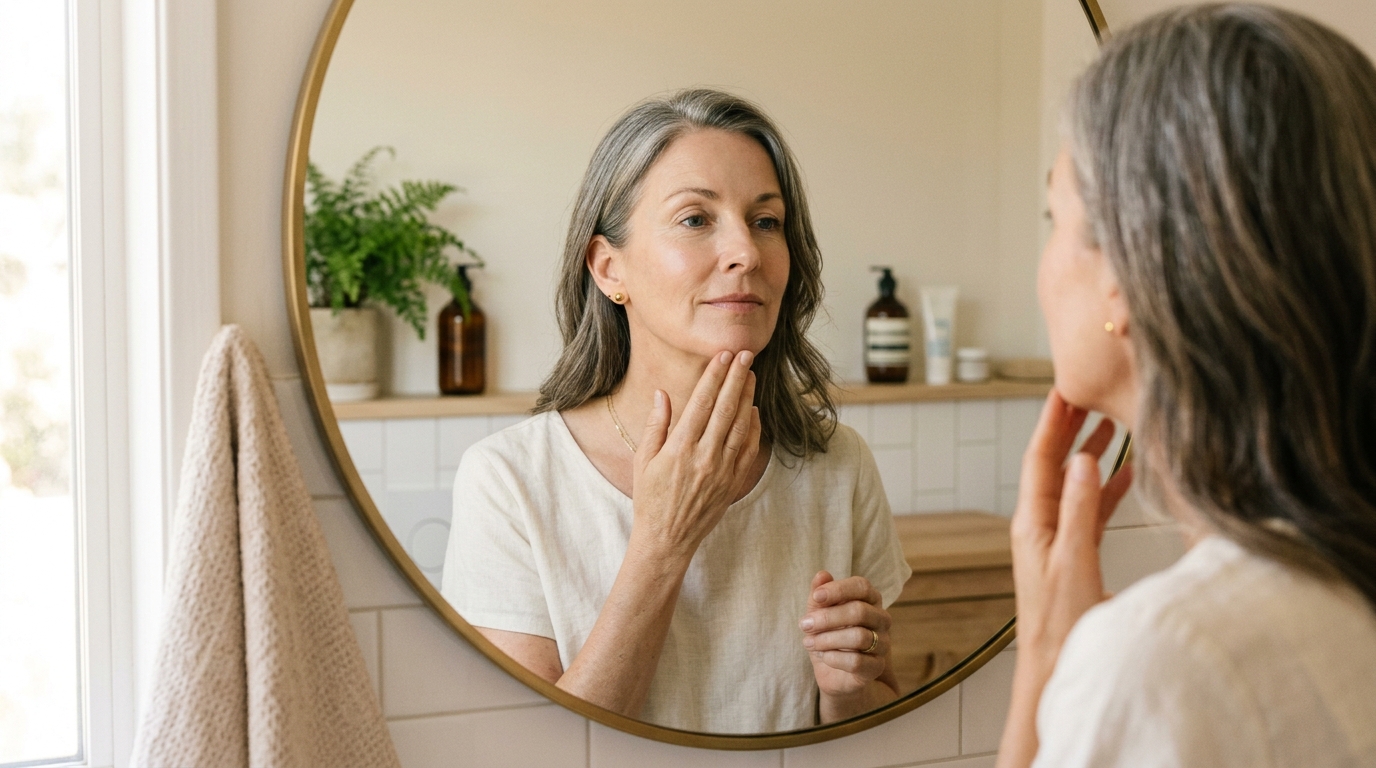
If you are searching “jowls”, you are almost certainly looking at the soft sagging just below your jawline and wondering two things: what causes it, and what actually gets rid of it. This guide answers both, from the buyer’s side, with real 2026 UK private prices so you can see what each option costs before you ever walk into a clinic.
The cosmetic industry has a strong incentive to make every treatment sound transformative. The honest picture is more mixed: some treatments genuinely lift and tighten, some give a modest improvement, and a few are mostly marketing. Below we cover what jowls are, why they form, the non-surgical options versus surgery, an honest take on creams and at-home fixes, and how to choose.
Table of Contents
- 1 What are jowls and what actually helps?
- 2 What are jowls? (and how they differ from a double chin)
- 3 What causes jowls?
- 4 The honest treatment overview
- 5 Can you get rid of jowls without surgery?
- 6 Skincare for jowls: useful, but know its limits
- 7 Non surgical jowl treatment: energy devices (HIFU, Ultherapy, radiofrequency, Morpheus8)
- 8 Injectables: dermal fillers, biostimulators and thread lifts
- 9 Surgery: lower face lift and neck lift
- 10 Do jowls go away with weight loss?
- 11 What about facial exercises and “facial yoga”?
- 12 How to choose a treatment (and a provider) without overpaying
- 13 How to prevent or slow jowls
- 14 When to see a GP or dermatologist
- 15 Frequently asked questions
- 16 Sources
What are jowls and what actually helps?
The short answer
Jowls are the sagging, loose skin and tissue that droop below the jawline and chin as the face loses its firm, defined edge. They form mainly through age-related loss of collagen and elastin, downward drift of facial fat pads, and gradual loss of bone support, sped up by sun exposure, smoking, genetics and significant weight loss. Nothing in a bottle removes jowls that already exist: skincare slows new sagging and improves skin quality, energy devices (HIFU, radiofrequency, RF microneedling) give mild to moderate tightening, injectables (dermal fillers and thread lifts) restore definition or add a temporary lift, and a surgical lower face and neck lift is the only treatment that reliably removes excess skin. The more dramatic and lasting the result, the more invasive the treatment.
- Jowls = sagging along the lower jaw as collagen and elastin drop
- Non-surgical: dermal filler, HIFU/Ultherapy, RF microneedling, thread lift
- Surgical: a lower face/neck lift for advanced sagging
- Creams can’t lift jowls, but SPF + retinoids slow them
If you only take one thing from this page: visible jowls are a structural change, and structure needs a structural treatment. The more honest a provider is about that, the more you can trust them.
What are jowls? (and how they differ from a double chin)
Jowls describe the loose skin and tissue that hang below the jawline, blurring the sharp line between the face and the neck. Mild jowls look like a slight softening at the corners of the mouth and along the jaw. More advanced jowling can sit below the jawbone and merge with sagging in the neck (sometimes loosely called “turkey neck”).
Jowls are not the same as a double chin. A double chin is usually fat under the chin. Jowls are mainly about skin laxity and the downward drift of facial fat and tissue, although the two often appear together.
What causes jowls?
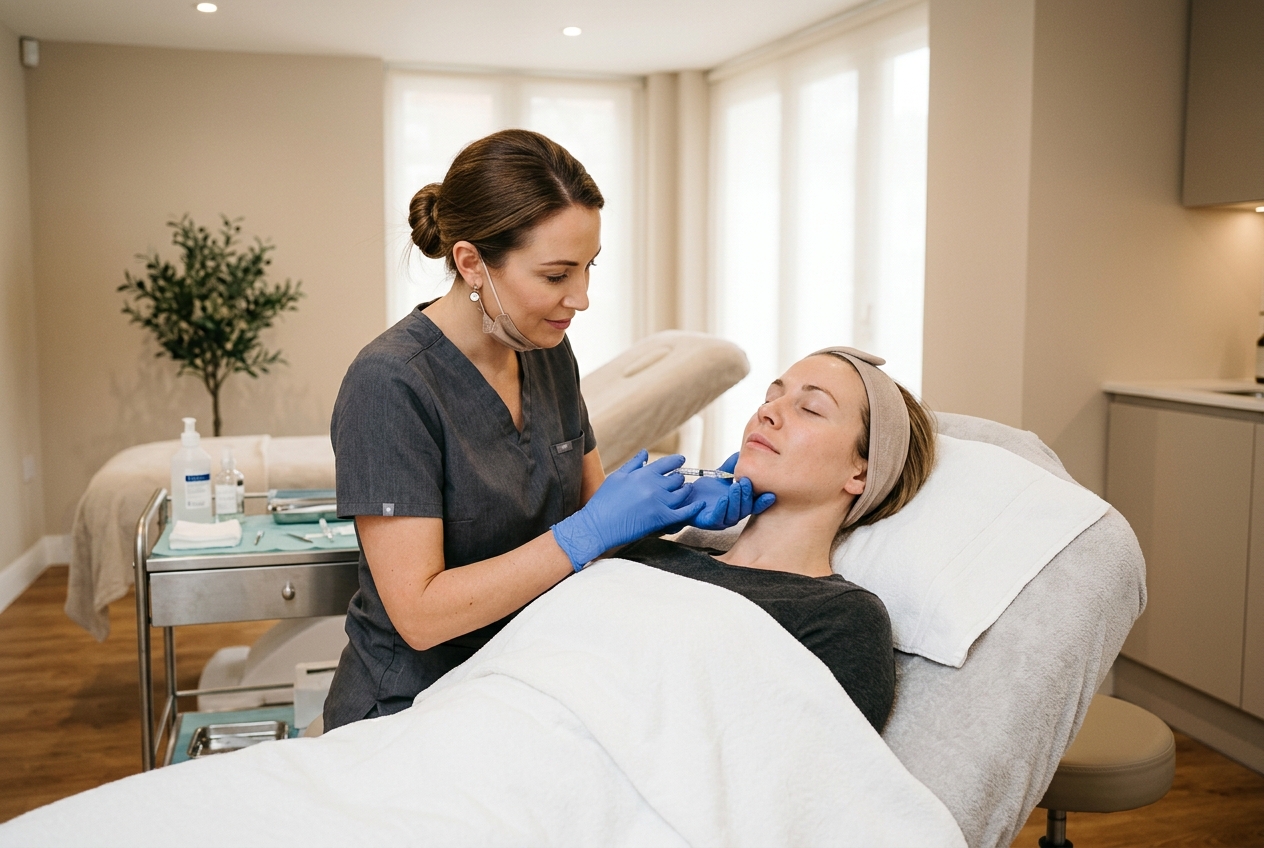
Jowling is driven by several changes that happen together as we age:
- Loss of collagen and elastin. These are the proteins that keep skin firm and springy. Production slows with age, so skin becomes thinner and less elastic. This is well established by the NHS and the British Association of Dermatologists.
- Fat pad descent. The face has distinct pads of fat. With age they shrink and slide downward, so volume that used to sit high in the cheek collects lower down along the jaw.
- Bone changes. The facial skeleton, including the jaw and chin, gradually loses some volume and definition with age, which removes support for the overlying tissue.
- Gravity and time. Years of downward pull on skin that is steadily losing its elasticity adds up.
On top of ageing, several factors speed the process:
- Sun exposure. UV damage breaks down collagen and elastin faster. This is the single biggest controllable factor, and the reason daily SPF matters.
- Smoking. Smoking reduces blood flow to the skin and accelerates collagen breakdown.
- Genetics. If your parents developed jowls early, you are more likely to as well. Bone structure and skin type are largely inherited.
- Significant weight loss. Losing volume quickly can leave skin that was previously stretched looking loose.
You may also read that sleeping on your side or pulling certain facial expressions causes jowls. The evidence for these is weak. Sun protection and not smoking are where your effort is best spent.
At what age do jowls start?
There is no fixed age. Most people notice early softening along the jaw from their late 30s to 40s, with jowling becoming more obvious through the 50s and 60s as collagen loss accelerates. Genetics, sun history and weight changes mean some people see it earlier and others much later. It is a normal change, not a sign that anything is wrong.
The honest treatment overview
Here is the quick verdict before the detail. Treatments fall into four groups, and they do very different things. The price column shows typical UK private 2026 ranges (sources at the end).
| Approach | Examples | What it realistically does | Typical UK price (2026) | Lasts | Honest verdict |
|---|---|---|---|---|---|
| Skincare | Retinoids, vitamin C, peptides, SPF | Improves skin quality and slows new sagging; does not lift existing jowls | £10 to £60+ per product | While you keep using it | Worth it as prevention and maintenance, not a fix |
| Energy devices | HIFU, Ultherapy, radiofrequency, RF microneedling (Morpheus8) | Mild to moderate tightening on early or moderate laxity; gradual and subtle | HIFU from a few hundred £; Ultherapy lower face £800 to £2,000; Morpheus8 ~£500 to £1,500/session | Months to ~12 to 18 months per course | Reasonable for mild jowls; manage expectations |
| Injectables | Dermal fillers, biostimulators, thread lifts | Restore lost volume and definition, or give a temporary physical lift | Jawline filler £400 to £1,200; thread lift ~£600 to £2,030 | Several months to ~2 years | Good for early to moderate cases; not a substitute for surgery |
| Surgery | Lower face lift, neck lift | The most reliable and longest-lasting lift for significant jowling | Face and neck lift ~£7,000 to £15,000 | Many years | The only option that genuinely removes excess skin |
The pattern is simple: the more dramatic and lasting the result, the more invasive the treatment. There is no needle, machine or cream that matches surgery without the surgery.
Can you get rid of jowls without surgery?
Partly. You can soften and improve mild to moderate jowls without surgery using energy devices, fillers and thread lifts, and you can protect and improve skin quality with skincare. What non-surgical options cannot do is remove excess hanging skin: for significant, established jowls, surgery is the only treatment that reliably does that. So the honest answer is that non-surgical treatments are genuinely useful early, and oversold late. The rest of this section walks through each option and what it costs.
Skincare for jowls: useful, but know its limits
Skincare cannot lift jowls that have already formed. What good skincare can do is improve the quality and thickness of the skin and slow the rate at which new sagging develops. For early, mild jowling, that genuinely helps the look. For prevention, it is the most cost-effective thing you can do.
The ingredients with the strongest evidence behind them:
- Sunscreen (SPF 30 or higher, daily). The most important anti-ageing product, full stop. It prevents the UV damage that breaks down collagen. The NHS and dermatology bodies are unanimous on this.
- Retinoids (retinol over the counter, tretinoin on prescription). The best-evidenced topical for stimulating collagen and improving skin firmness over months of consistent use. Start slowly to avoid irritation.
- Vitamin C. An antioxidant that supports collagen and helps protect against daytime UV and pollution damage.
- Peptides. Often marketed for “firming”. Evidence is more modest than for retinoids, but they are well tolerated and can be a sensible part of a routine.
Be sceptical of any cream, serum or device sold as a “non-surgical face lift in a bottle”. If a product promises to lift jowls, the promise is bigger than the science. A firming cream costs around £10 to £60 and is worth using as maintenance, not as a cure. Treat skincare as the foundation that keeps your skin healthy, then look to in-clinic treatments if you want actual lifting. The same logic applies to related concerns like forehead lines and under-eye wrinkles: topicals help skin quality, but deeper structural change needs more than a cream.
Non surgical jowl treatment: energy devices (HIFU, Ultherapy, radiofrequency, Morpheus8)
These treatments deliver heat energy into the deeper layers of the skin to trigger a wound-healing response, which stimulates new collagen and causes some tightening over the following weeks to months. They are popular because they are non-invasive with little downtime, and they are the treatments Google’s own AI summary highlights for jowls.
- HIFU (high-intensity focused ultrasound). Focused ultrasound heats deeper tissue to encourage tightening. Generally the most budget-friendly device option, often a few hundred pounds per session. Best for mild or early-moderate laxity; results are gradual and not permanent.
- Ultherapy. The branded micro-focused ultrasound system that uses real-time imaging to target the deeper SMAS layer. More expensive than generic HIFU because of the technology and the imaging. In the UK, lower face, jawline or full neck commonly runs £800 to £2,000, with targeted areas from around £345 and full face, neck and décolletage £2,500+ (Berkshire Aesthetics, 2026).
- Radiofrequency (RF). Uses radio waves to heat the skin and stimulate collagen. Generally gives a modest tightening, usually over a course of sessions.
- Radiofrequency microneedling (e.g. Morpheus8). Combines microneedling with RF heat delivered below the surface, for skin texture and mild tightening together, over a course. Typical UK pricing is around £500 to £1,500 per session, with a course of three sessions commonly £1,400 to £2,400 (Morpheus8 London and UK clinic guides, 2026).
Honest expectations: energy devices can give a worthwhile improvement on early jowling, but results are subtle, vary a lot between individuals, and usually need maintenance every 12 to 18 months. They will not replicate a surgical lift, and they do little for significant, hanging jowls. If a clinic shows you dramatic before-and-after photos from a single device session, be cautious. Choose a practitioner who sets realistic expectations and is honest that some people see little change.
Injectables: dermal fillers, biostimulators and thread lifts
Injectable treatments work in two ways: by replacing lost volume and definition, or by physically lifting tissue.
Dermal fillers
Dermal fillers (usually hyaluronic acid) are injected to restore volume and redefine the jawline and chin. They do not lift the jowl directly so much as rebuild structure around it, so the jaw looks sharper and the jowl less obvious. Done well and conservatively, this can be very effective for early to moderate jowling. Done poorly or excessively, it can add heaviness to a face that is already sagging, which makes things worse. Skill and restraint matter enormously here.
- Lasts: typically several months to around two years depending on product and area.
- Downtime: minimal, usually some bruising or swelling.
- Cost: jawline filler in the UK typically runs £400 to £1,200, with most clinics charging from around £200 to £300+ per ml of hyaluronic acid and most people needing more than one ml (Deep Aesthetics, ClinicSpark and TreatCompare 2026 cost guides).
If your concern is partly about hollowing and shadows higher up the face, related volume treatments like tear trough fillers follow the same “restore structure” logic, and a good injector assesses the whole face rather than treating the jowl in isolation.
Biostimulators (e.g. poly-L-lactic acid, calcium hydroxylapatite)
These are injectables that stimulate your own collagen over time rather than simply filling. They build gradual, more natural firmness across several sessions. They suit people who want subtle improvement in skin quality and support rather than obvious volume.
Thread lifts
A thread lift uses dissolvable surgical threads inserted under the skin to physically lift sagging tissue, with the threads also stimulating some collagen as they dissolve. It is genuinely a lift, but a temporary and modest one, and it is best for mild to moderate jowls. Results are not comparable to a surgical face lift, and they fade as the threads dissolve (usually over one to three years, with much of the lift gone sooner).
- Lasts: usually months to a couple of years, not permanent.
- Downtime: minimal to a few days; some bruising, tightness or puckering early on.
- Cost: a lower-face thread lift in the UK typically runs £599.50 to £2,030 at a CQC-regulated chain such as sk:n (priced per number of lifts), and from around £850 for a PDO cog jowl lift up to £1,950 for non-PDO threads at clinics such as Linia Skin Clinic (2026). Budget more if you need several threads.
A safety note on all injectables and threads: in the UK, dermal fillers and similar injectables are not as tightly regulated as you might assume, and complications, though uncommon, can be serious. Always choose a qualified, insured medical practitioner (doctor, dentist, nurse or pharmacist prescriber) working in a reputable, ideally CQC-regulated clinic, never a salon offer or a home appointment. Ask what they would do if a complication occurred. A good provider welcomes that question.
Surgery: lower face lift and neck lift
A lower face lift, often combined with a neck lift, is the most effective and longest-lasting treatment for significant jowling. It is the only approach that actually removes excess skin and repositions the deeper tissue (the SMAS layer surgeons tighten), which is why the results are far more dramatic and durable than anything non-surgical.
- What it does: tightens and repositions the deeper facial tissue and removes excess skin, restoring a defined jawline.
- Lasts: many years (ageing continues, but you are reset to a younger starting point). A neck lift often lasts 10 to 15 years.
- Downtime: significant. Expect swelling and bruising, and around two weeks before you look socially presentable, with full settling over about three months.
- Risks: as with any surgery, these include bleeding, infection, scarring and, rarely, nerve injury affecting facial movement. A reputable surgeon will discuss these in detail.
- Cost: a major private expense. A combined face and neck lift in the UK is commonly quoted in the region of £7,000 to £10,000, with London surgeon-led clinics charging more (for example, guide starting prices around £12,495 to £14,995 at clinics such as Enhance Medical Group and Cadogan Clinic, 2026).
Surgery is rarely available on the NHS for cosmetic jowling, as it is considered a cosmetic rather than a medical concern. If you are considering it, choose a surgeon on the GMC specialist register for plastic surgery, ideally a member of a recognised body such as BAAPS, and take time over the decision. Be wary of clinics pushing you to book quickly or offering “today only” pricing on surgery.
Do jowls go away with weight loss?
Usually not, and they can look worse. Losing weight reduces fat under the skin, but if the skin has already lost elasticity it does not always shrink back, so significant or rapid weight loss can leave the lower face looking looser rather than tighter. Modest, steady weight management is best for skin overall. If your jowls appeared or worsened after weight loss, the issue is loose skin, which is a structural problem that skincare will not fix.
What about facial exercises and “facial yoga”?
There is no good evidence that facial exercises or “jowls exercises” lift jowls, and some practitioners worry that repeated exaggerated movements could deepen lines elsewhere. They are low-risk and free, so there is little harm in trying them, but do not expect a meaningful change in jowling, and do not let them replace sun protection. The same goes for “natural” tightening claims online: there is no home routine that reverses established jowls.
How to choose a treatment (and a provider) without overpaying
A few buyer-side moves that save money and reduce disappointment:
- Match the treatment to the severity. Skincare and energy devices for early jowls; fillers or threads for early to moderate; surgery for significant, hanging jowls. Paying for a device that cannot lift what you have is the most common waste of money.
- Get the full price in writing, including sessions. Energy devices and biostimulators often need a course, and threads and fillers need topping up. A low headline price for one session can cost more over a year than a higher one-off.
- Ask exactly what device or product is used. For “Ultherapy”, confirm it is the genuine system with imaging, not a generic HIFU device sold under the same name. For fillers, ask the brand and how many ml.
- Check the practitioner and regulation. A qualified medical injector or a GMC-registered plastic surgeon in a CQC-regulated clinic (HIW in Wales, HIS in Scotland) matters far more than a low price.
- Be wary of “non-surgical face lift” promises and salon deals. Complications from injectables done badly can be serious and expensive to fix.
- Get a face-to-face consultation before committing. A practitioner who examines your face in person and sets honest expectations is worth more than any online quote.
How to prevent or slow jowls
You cannot stop ageing, but you can slow how quickly jowls appear:
- Wear SPF every day. The single most effective long-term step.
- Do not smoke. If you do, stopping helps your skin as well as the rest of you.
- Use a retinoid consistently to support collagen over the years.
- Keep a stable, healthy weight and avoid repeated large losses and gains.
- Stay generally healthy: good sleep, a balanced diet and not drinking heavily all support skin quality.
None of this reverses existing jowls, but it protects the skin you have and delays the next stage.
When to see a GP or dermatologist
Jowls themselves are a normal, cosmetic change and not a medical problem. See a GP or dermatologist if:
- You notice rapid or one-sided changes to your face, drooping or weakness on one side, which needs prompt medical assessment to rule out other causes.
- You have a new or changing lump, mole or skin lesion along the jaw or neck.
- You are considering cosmetic treatment and want impartial advice before committing, especially before injectables or surgery.
- You experienced a complication after a cosmetic treatment (severe pain, blanching or discolouration of the skin, vision changes after filler), which can be urgent.
If you want a medical opinion before spending money on treatment, you can start with your GP. For how to access dermatology care in the UK, including NHS referral routes and going private, see how to see a dermatologist in the UK.
Frequently asked questions
What causes jowls?
Can you get rid of jowls without surgery?
What is the best treatment for jowls in the UK?
How much do jowl treatments cost in the UK?
Do jowls go away with weight loss?
How long do non-surgical jowl treatments last?
Do facial exercises get rid of jowls?
Is treatment for jowls available on the NHS?
Sources
- NHS: skin ageing, sun safety and stop-smoking guidance
- British Association of Dermatologists (BAD): patient information on skin ageing and cosmetic procedures
- DermNet: skin ageing and cosmetic dermatology resources
- NICE: guidance relevant to cosmetic procedures and their regulation
- British Association of Aesthetic Plastic Surgeons (BAAPS): guidance on choosing a surgeon and face/neck lift surgery
- UK clinic and cost pages, accessed June 2026 (cited as provider examples, not endorsements): sk:n Clinics (thread lift pricing), Linia Skin Clinic (thread lift pricing), Berkshire Aesthetics (Ultherapy cost guide), Cadogan Clinic (neck/face lift cost), Enhance Medical Group (facelift cost), and 2026 UK cost guides (Deep Aesthetics, ClinicSpark, TreatCompare, Morpheus8 London)