
Disclosure: this guide contains affiliate links. If you buy through them we may earn a small commission, at no extra cost to you. It never affects which products we include.
If a pharmacist or GP has pointed you towards Dermol 500 Lotion, or you have spotted the white pump bottle on a pharmacy shelf next to your usual moisturiser, you probably want a straight answer to one question: what is it actually for, and is it right for your skin?
This guide explains what Dermol 500 Lotion is, exactly how to apply it as a moisturiser and as a soap substitute, whether you can buy it over the counter, what it costs in the UK in 2026, the safety points that genuinely matter (including the fire warning), and how it compares to the main alternatives.
Table of Contents
- 1 What is Dermol 500 Lotion?
- 2 What is in Dermol 500 Lotion?
- 3 What is Dermol 500 Lotion used for?
- 4 How to use Dermol 500 Lotion
- 5 How long should you use Dermol 500 for?
- 6 Can I buy Dermol 500 over the counter?
- 7 Dermol 500 Lotion price in the UK (2026)
- 8 Safety, side effects and the fire warning
- 9 Dermol 500 vs the alternatives
- 10 When to see a GP or dermatologist
- 11 Frequently asked questions
- 12 The bottom line
- 13 Sources
What is Dermol 500 Lotion?
The short answer
Dermol 500 Lotion is an antimicrobial emollient: a leave-on moisturiser with a built-in antiseptic, used mainly for dry, itchy, eczema-prone skin that keeps getting irritated or infected. It does two jobs at once. It softens and hydrates dry skin (the emollient part), and its antiseptic ingredients reduce the bacteria living on the skin surface (the antimicrobial part). It can also be used as a soap substitute. It is not a steroid, it is not a cure for eczema, and it is suitable for all age groups, including babies. You can buy it over the counter from pharmacies or get it on prescription from a GP.
- An antimicrobial emollient for eczema and dry skin
- Use as a leave-on moisturiser or soap substitute
- Not a steroid; safe for regular use
- Available over the counter and on prescription
If you only take one thing from this page: Dermol 500 is a foundation skincare product for eczema-prone skin, not an emergency treatment. Used regularly and generously, an antimicrobial emollient like this is part of day-to-day skin care, alongside any steroid cream or other treatment your GP prescribes for flare-ups.
What is in Dermol 500 Lotion?
Dermol 500 Lotion comes as a light, pourable lotion supplied in a 500ml pump bottle. It is part of the wider Dermol range, which also includes Dermol Cream (a richer texture), Dermol 600 Bath Emollient and Dermol Wash. The “500” refers to this everyday 500ml leave-on and soap-substitute lotion that many people are prescribed or buy.
What separates it from a plain moisturiser is its two antiseptic ingredients:
- Benzalkonium chloride and chlorhexidine dihydrochloride, two antimicrobial agents that reduce bacteria on the skin (including *Staphylococcus aureus*, which can colonise eczema-prone skin and trigger flare-ups).
It also contains emollient (moisturising) ingredients, including liquid paraffin and isopropyl myristate, which soften the skin and help trap water in the outer layer.
Because it combines moisturising and antiseptic action, it is described as an antimicrobial emollient rather than a simple moisturiser.
What Dermol 500 is not
- It is not a steroid and contains no hydrocortisone. It will not bring down a severe inflamed flare on its own the way a steroid cream might.
- It is not an antibiotic. The antiseptics reduce surface bacteria but do not treat an established skin infection that needs medical treatment.
- It is not a one-off treatment. Emollients work best used regularly, often long term.
What is Dermol 500 Lotion used for?
Dermol 500 Lotion is used for dry and itchy skin conditions, including:
- Eczema (atopic eczema and related dermatitis).
- Dermatitis, including irritant and contact forms.
- Other dry, scaly or itchy skin where a moisturiser with an antiseptic element is helpful.
It is often chosen when skin is prone to repeated bacterial infection, or when itching and scratching keep breaking the skin. The antiseptic ingredients aim to reduce the bacteria that can colonise damaged, eczema-prone skin and make flare-ups worse.
It is worth being clear: emollients like this manage and soothe the skin. They are part of ongoing care, not a cure. People with eczema usually use an emollient every day, whether or not the skin is flaring.
How to use Dermol 500 Lotion
Always follow the advice from your pharmacist, GP or the patient information leaflet that comes with the product. The general principles for using an antimicrobial emollient like this are below.
As a leave-on moisturiser
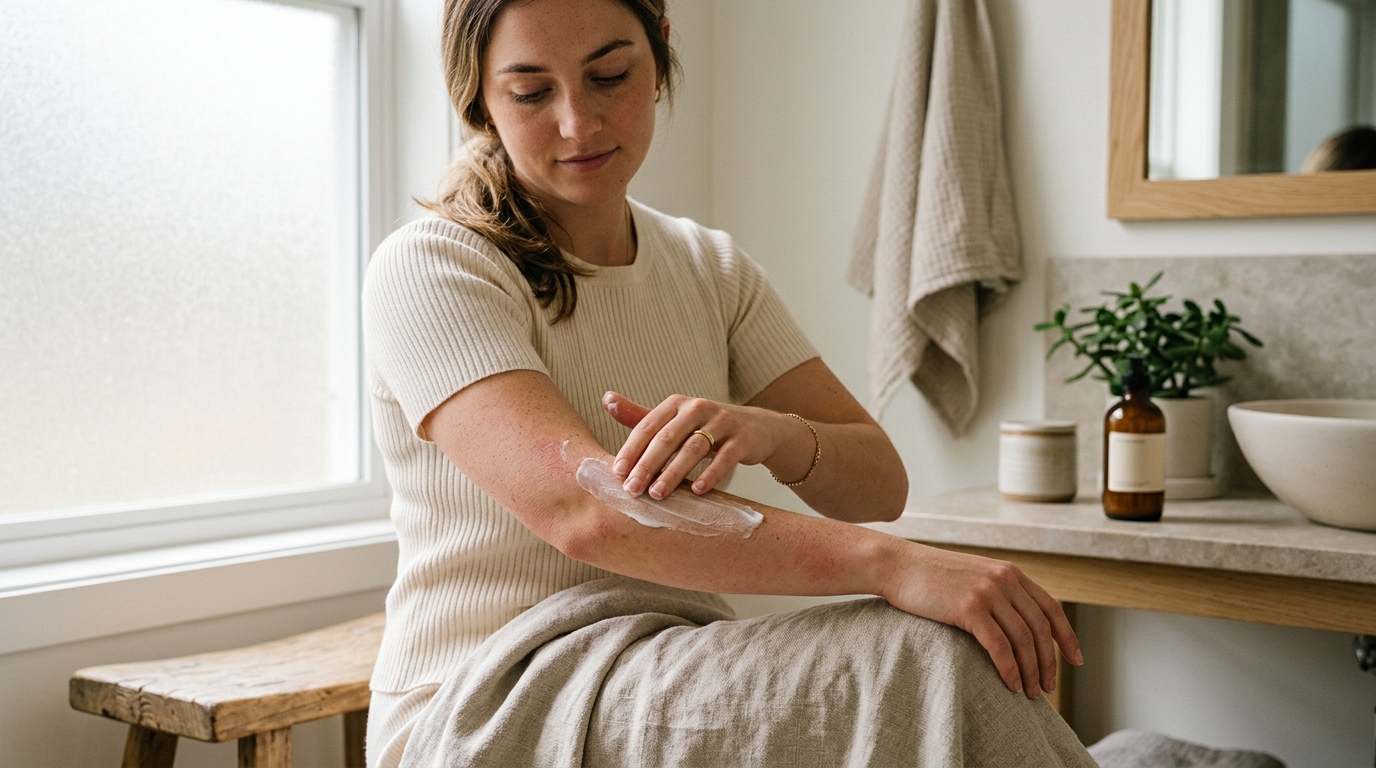
1. Apply it often and generously. Dry skin needs more moisturiser than most people expect. UK eczema guidance suggests applying emollient several times a day, and more often when the skin is dry or flaring. 2. Smooth it on, do not rub it in hard. Apply in the same direction the hair grows, using gentle downward strokes. Rubbing vigorously can irritate the skin and block hair follicles. 3. Apply after washing or bathing, while the skin is still slightly damp, to help lock in moisture. 4. Keep using it even when your skin looks fine. Regular use helps keep the skin barrier in good condition and can reduce how often flare-ups happen.
As a soap substitute or wash
Dermol 500 is also commonly used instead of soap. Ordinary soap and many shower gels strip natural oils and can make eczema worse. To use it as a wash:
- Rub the lotion onto wet skin before or during washing or bathing.
- Rinse gently and pat the skin dry, rather than rubbing it dry.
- It can be used in the bath or shower as a cleanser in place of soap and shower gel.
If you are mainly after a wash product rather than a leave-on lotion, our guide to shower gel for eczema explains how soap substitutes and emollient washes compare.
Practical tips
- Use the pump rather than repeatedly dipping fingers into a tub. The 500ml pump bottle keeps the product cleaner and makes generous use easier.
- Allow it to soak in before applying any other prescribed cream (such as a steroid). Leave a gap of several minutes between different products so they do not simply dilute each other.
- Be careful with slips. Emollients can make baths, showers and floors very slippery.
How long should you use Dermol 500 for?
There is usually no fixed stopping point. Because eczema and chronically dry skin are ongoing conditions, an antimicrobial emollient is generally used for as long as the skin needs it, which for many people means continuous, long-term, daily use. Unlike a steroid cream, an emollient is not something you taper off after a set number of days. The sensible approach is to keep using it regularly, including during settled periods, and to review with your pharmacist or GP if the skin is not improving, if it stings, or if you are getting through bottles unusually fast.
Can I buy Dermol 500 over the counter?
Yes. Dermol 500 Lotion is available to buy over the counter from pharmacies and online pharmacies in the UK, and it can also be prescribed by a GP. It is a pharmacy emollient rather than a prescription-only medicine, so you do not need a prescription to purchase it, though many people with eczema receive it on repeat prescription as part of a managed treatment plan.
A few practical notes:
- It is widely stocked by UK pharmacies and online retailers. (Searches for “Dermol 500 lotion Boots”, “Tesco” or “Asda” are common; availability and price vary by retailer, and dedicated pharmacies tend to have the most consistent stock.)
- If you use emollients heavily and pay for NHS prescriptions, it is worth asking your GP or pharmacist whether buying over the counter or getting it on prescription works out cheaper for your situation.
You can also buy Dermol 500 Lotion (500ml) on Amazon UK if that is more convenient. Always check that any product you buy matches what your pharmacist or GP recommended.
Dermol 500 Lotion price in the UK (2026)
Dermol 500 is an inexpensive, familiar UK product. Based on UK pharmacy listings in June 2026:
| Pack | Typical UK price (2026) | Notes |
|---|---|---|
| Single 500ml pump bottle | About £8.49 to £9.99 | The standard pack most people buy or are prescribed |
| 3 x 500ml multipack | About £24 to £27 | Better value if you use it daily and long term |
| 6 x 500ml multipack | About £49 to £54 | Lowest cost per bottle for heavy, ongoing use |
Prices vary between pharmacies and online retailers and change over time, so treat these as a guide rather than a quote. If you are a regular user, a multipack usually works out cheaper per bottle than buying single bottles. People who pay for prescriptions should compare the over-the-counter price against the NHS prescription charge, because for a single low-cost item, buying it yourself can sometimes be cheaper than a prescription.
Check the current Dermol 500 Lotion price on Amazon UK.
Safety, side effects and the fire warning
Dermol 500 is widely used and generally well tolerated, but a few points are worth knowing.
Possible side effects
- Some people experience stinging, redness or irritation, particularly on broken or very inflamed skin. If the skin reacts badly, stop using it and speak to a pharmacist or GP.
- As with any product, an allergic reaction is possible. The leaflet specifically flags that it should not be used by anyone allergic to its ingredients, particularly chlorhexidine. Signs such as a worsening rash, swelling or difficulty breathing need urgent medical attention.
Fire safety (important)
Emollients that contain paraffin, and even many that do not, can soak into fabric (clothing, bedding, dressings and bandages) and make it catch fire more easily. This is a recognised safety warning across paraffin-based and paraffin-free emollients in the UK, and Dermol 500 contains paraffin.
- Keep well away from naked flames, cigarettes, lighters and anything that could ignite.
- Wash clothing and bedding regularly. Washing reduces, but does not completely remove, the build-up.
This is a genuine, well-documented risk highlighted by UK medicines safety guidance, so it is worth taking seriously rather than glossing over.
Using it with other treatments
Dermol 500 is often used alongside other eczema treatments, including prescribed steroid creams. It does not replace them. If you are using a steroid cream as well, apply the emollient and the steroid at different times (leaving a few minutes between them), and ask your GP or pharmacist about the order and timing.
Dermol 500 vs the alternatives
There is no single “best” emollient. The right one depends on your skin, how dry it is, where on the body you are using it and personal preference on texture. The key question is usually whether you actually need the antiseptic. If your skin is not prone to repeated infection, a plain emollient may be perfectly adequate, and some people find plain moisturisers gentler.
| Product | Type | Antiseptic? | Best for | Buy |
|---|---|---|---|---|
| Dermol 500 Lotion | Light antimicrobial emollient lotion | Yes (benzalkonium chloride, chlorhexidine) | Dry, itchy, infection-prone skin; doubles as a soap substitute | Amazon UK |
| Dermol Cream | Thicker antimicrobial emollient | Yes | Same antiseptic action in a richer cream for drier patches | Amazon UK |
| Cetraben Cream | Plain emollient cream | No | Everyday moisturising for dry, eczema-prone skin where no antiseptic is needed | Amazon UK |
| Doublebase Gel | Plain emollient gel | No | Dry skin and eczema; absorbs fairly quickly for a gel | Amazon UK |
| E45 Lotion | Basic emollient lotion | No | Light, everyday moisturising of dry skin | Amazon UK |
| Epaderm Cream | Rich emollient | No | Very dry skin; can be used as a moisturiser and soap substitute | Amazon UK |
A few things to weigh up:
- The antiseptic is the deciding factor. It is the main reason to choose Dermol over a standard moisturiser. If your skin does not keep getting infected, you may not need it.
- Texture matters. Lotions are light and absorb quickly, which suits daytime and larger areas. Creams and ointments are richer and better for very dry patches but feel greasier.
- It is trial and error. UK eczema guidance is clear that finding the emollient that works for you often means trying more than one. What soothes one person can sting another.
If you would like a product matched to your skin and condition, ask a pharmacist or your GP, and see our guide on how to see a dermatologist in the UK if your eczema is severe or not responding.
When to see a GP or dermatologist
An emollient is part of everyday skin care, but some situations need professional input. See a GP or pharmacist if:
- Your eczema or dermatitis is not improving, or is getting worse despite regular moisturising.
- You think the skin may be infected: signs include increasing redness, heat, swelling, weeping, yellow crusting, or feeling unwell with a fever.
- The lotion itself seems to be irritating or stinging your skin.
- You are getting through emollient very quickly and flaring often. You may need a review of your overall treatment plan.
Ask for a referral to a dermatologist if your skin condition is severe, widespread, not responding to standard treatment, or significantly affecting your sleep, mood or daily life. Your GP is the usual first step for that referral on the NHS. For the routes into dermatology care, see how to see a dermatologist in the UK.
Frequently asked questions
What is Dermol 500 Lotion used for?
Is Dermol 500 a steroid?
Can I buy Dermol 500 over the counter?
How long should you use Dermol 500 for?
Can I use Dermol 500 on my face?
Is Dermol 500 suitable for babies and children?
How much does Dermol 500 Lotion cost in the UK?
The bottom line
Dermol 500 Lotion is a light, antimicrobial emollient used mainly for eczema, dermatitis and other dry, itchy skin that is prone to irritation or infection. It moisturises and reduces surface bacteria, doubles as a soap substitute, and is meant to be used regularly and generously over the long term. It is not a steroid and not a cure. You can buy it over the counter for under £10 a bottle or get it on prescription, the antiseptic ingredients are the main reason to choose it over a plain moisturiser, and finding the right emollient often takes a little trial and error.
This is general information, not medical advice. Suitability and results vary from person to person. Always read the patient information leaflet, and see a GP, pharmacist or dermatologist about your own skin.
Sources
- NHS: eczema, atopic eczema, emollients and treatments
- British Association of Dermatologists (BAD): patient information on eczema and emollients
- DermNet: emollients and atopic dermatitis
- NICE: guidance on atopic eczema management and emollient use
- National Eczema Society: emollients and washing
- electronic Medicines Compendium (emc): Dermol 500 Lotion patient information leaflet (ingredients, suitability, fire safety warning)
- UK pharmacy product pages, accessed June 2026: LloydsPharmacy, Pharmacy2U, Chemist4U, medino (cited for price and availability, not as endorsements)