
Disclosure: this guide contains affiliate links. If you buy through them we may earn a small commission, at no extra cost to you. It never affects which products we include.
If your skin is itching and you are standing in a UK pharmacy aisle, an antihistamine cream looks like the obvious answer. It says “antihistamine”, it says “anti-itch”, and it goes exactly where the problem is. Simple.
The honest answer is more useful: antihistamine creams help in some situations and do very little in others, and for a lot of common itchy-skin problems they are not the product the NHS, the BNF, or most UK pharmacists would reach for first. This guide explains when a topical antihistamine is a sensible buy, when an oral antihistamine tablet is the better choice, when to avoid topical antihistamines entirely (large areas, broken skin, eczema), and what UK products actually cost in 2026.
We are independent and we do not sell these products, so we have no reason to talk you into the most expensive tube on the shelf.
Table of Contents
- 1 What is antihistamine cream, and when should you use it?
- 2 What an antihistamine cream actually does
- 3 The honest limitations (what the label does not shout about)
- 4 When an antihistamine cream is a reasonable choice
- 5 When an oral antihistamine is the better tool
- 6 When a cream is right, but not an antihistamine one
- 7 UK anti-itch options compared (with 2026 prices)
- 8 What the NHS and BNF advise for itchy skin
- 9 How to choose, in plain steps
- 10 When to see a GP or dermatologist
- 11 Frequently asked questions
- 12 Sources
What is antihistamine cream, and when should you use it?
The short answer
Antihistamine cream is a topical anti-itch treatment that blocks histamine at the skin’s surface. It works best for one or two small, unbroken itchy spots such as insect bites, stings, or nettle rash. For widespread itching, hives (urticaria), or itch driven by inflammation (eczema, allergic rashes), an oral antihistamine tablet or a different cream usually works better. UK guidance advises against using topical antihistamines on large areas, broken or blistered skin, or eczema, and against using them continuously for more than about three days because of a sensitisation risk. Match the product to the cause, not just to the word “itch”.
- Best for one or a few small, itchy spots or bites
- Not for large areas or broken skin
- Oral antihistamines suit widespread itch better
- Hydrocortisone 1% helps inflamed patches short-term
What an antihistamine cream actually does
Itching is often triggered by histamine, a chemical your body releases during allergic reactions and irritation. Antihistamines block histamine’s effect, which can calm the itch.
A topical antihistamine cream applies that blocker directly to the skin. Common active ingredients you will see in UK products include:
- Mepyramine maleate (the active in Anthisan, the best-known UK bite and sting cream)
- Diphenhydramine (found in some bite and sting creams, e.g. Benadryl-type products)
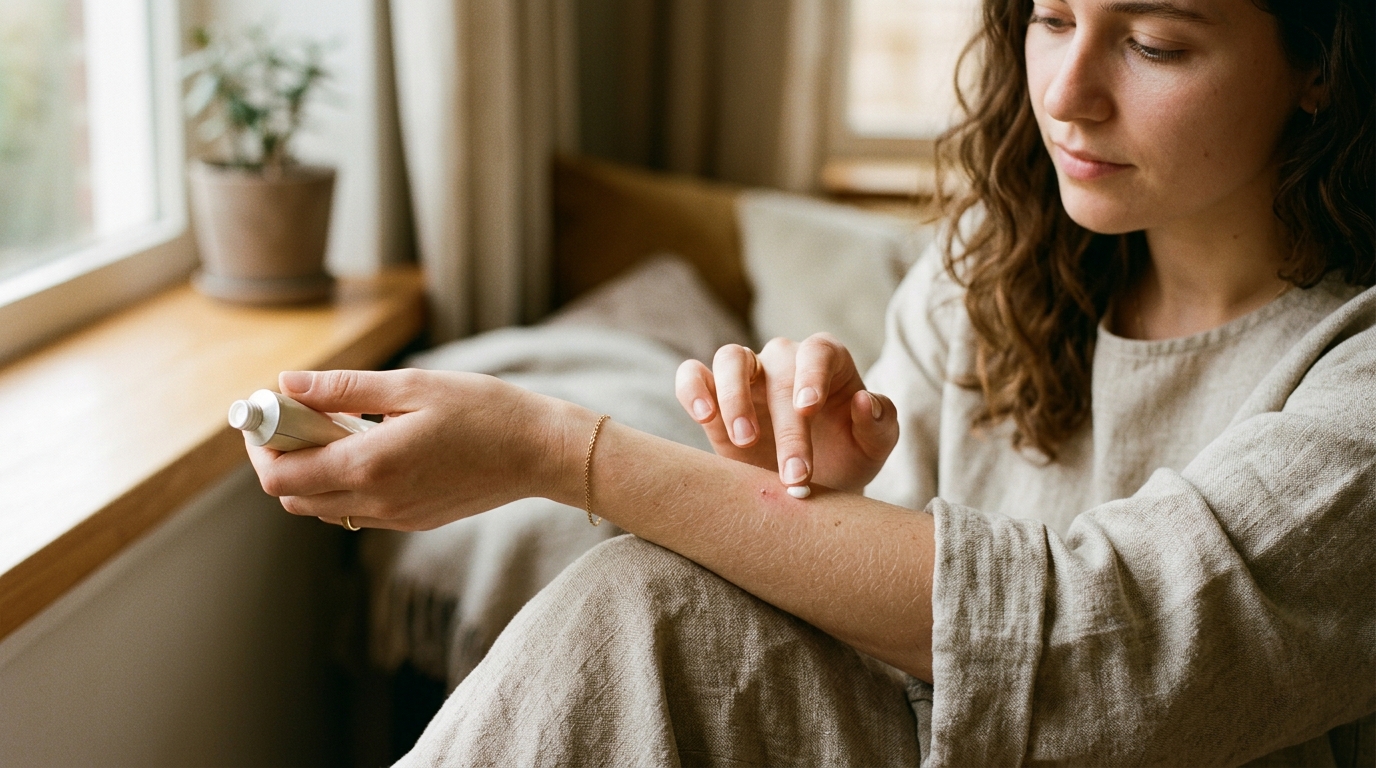
The appeal is obvious: it goes on the itchy spot, not through your whole system. For one or two small, itchy areas, that can be enough to make you stop scratching.
But “applied directly” is not the same as “more powerful”, and topical antihistamines have real limits.
The honest limitations (what the label does not shout about)
A few things are worth knowing before you reach for a topical antihistamine. These echo what the BNF (the UK’s clinical drug reference) and the NHS say about topical antipruritics:
- They are best for small, localised areas. Spread thinly over one insect bite, fine. Smeared over a large itchy region, less so.
- Guidance advises against use on broken, blistered, weeping, or sunburnt skin, and against using them on large areas. Always read the specific product leaflet.
- There is a sensitisation risk. Putting an antihistamine on the skin can, in some people and over time, make the skin more reactive (allergic to the cream itself), which can make the itching worse. That is one reason topical antihistamines are not a default first-line choice, and why most leaflets say do not use continuously for more than about three days unless a professional advises it.
- Avoid them on eczema. Topical antihistamines are generally not recommended for eczema; an emollient and, for flares, a mild steroid cream do the real work.
- They do not treat the underlying cause. If your skin is inflamed (red, raised, eczema-like), the itch is being driven by inflammation. Blocking histamine at the surface may not touch that.
- Do not combine an antihistamine cream with an antihistamine tablet without advice, because you can end up taking more than intended.
None of this means antihistamine creams are useless. It means they have a narrow, specific job.
When an antihistamine cream is a reasonable choice
A topical antihistamine can be a sensible, low-effort option when:
- You have one or a few small, itchy spots, such as insect bites, stings, or nettle rash.
- The skin is unbroken (not blistered, weeping, or raw).
- You want localised relief without taking a tablet.
- It is short-term, not something you reach for every day for weeks.
For a single midge or mosquito bite on an arm, a dab of anti-itch cream to stop you scratching is perfectly reasonable. The classic UK choice here is Anthisan Bite & Sting Cream (mepyramine maleate 2%), around £4 to £5 for a 20g tube and the most-bought topical antihistamine on the UK market.
When an oral antihistamine is the better tool
For a lot of itchy-skin situations, an antihistamine tablet is the more effective choice, because it works throughout the body rather than at one patch of skin. Reach for oral antihistamines (rather than a cream) when:
- The itching is widespread or moving around, not confined to one spot.
- You have hives (urticaria), the raised, itchy welts that can come and go. Oral antihistamines are the standard self-care step here.
- You are reacting to something you ate, touched, or were exposed to, and the response is over a large area, for example an allergic reaction to sunscreen.
- The itch is keeping you awake. Some older antihistamines cause drowsiness, which can help at night, while “non-drowsy” types are designed for daytime.
UK pharmacists can advise on which oral antihistamine suits you, including non-drowsy daytime options and the difference between the older sedating and newer non-sedating types. If you are weighing up the common UK tablets, our guide to Piriton vs Piriteze breaks down the difference. Always check the leaflet and any interactions if you take other medicines, are pregnant, or are buying for a child.
When a cream is right, but not an antihistamine one
Here is the part the aisle does not make obvious: for many itchy rashes, the most useful cream is not an antihistamine at all.
- For inflamed, itchy rashes (eczema flares, irritant rashes, some bite reactions): a mild topical steroid such as 1% hydrocortisone cream is often the more effective pharmacy option, because it calms the inflammation driving the itch. It is available from UK pharmacies for short-term use on small areas in adults, with conditions on where and how long it can be used. Avoid the face, eyes, and broken skin unless a professional says otherwise, and follow the leaflet. A typical 10g tube is around £4 (for example, Pinewood’s Hydrocortisone 1% Cream).
- For dry, itchy skin: an emollient (moisturiser) is frequently the unglamorous hero. Dry skin itches, and regularly applying a fragrance-free emollient can reduce itching more reliably than any “anti-itch” gimmick. Itch-targeted emollients such as E45 Itch Relief Cream (around £5 for 50g) suit dry, irritated skin.
- For itch from bites, chickenpox, or prickly heat: crotamiton cream (such as Eurax, around £6 for 100g) or calamine are traditional soothing options many UK households keep in the cupboard. Note the BNF describes crotamiton’s anti-itch value as uncertain, so treat it as a soothing option rather than a strong treatment.
The takeaway: “itchy” is a symptom with several different causes, and the best cream depends on the cause.
UK anti-itch options compared (with 2026 prices)
| Option | Type | Typically best for | Key cautions | Rough UK price (2026) |
|---|---|---|---|---|
| Antihistamine cream (mepyramine, e.g. Anthisan; or diphenhydramine) | Topical | One or a few small, unbroken itchy spots, insect bites, nettle rash | Avoid large areas, broken/sunburnt skin and eczema; sensitisation risk; usually max ~3 days | About £4 to £5 (20g Anthisan); generic antihistamine cream 25g around £4 |
| Oral antihistamine tablet | Oral | Widespread itch, hives, allergic reactions | Drowsy vs non-drowsy types; check interactions, pregnancy, child dosing | Low cost; many supermarket own-brands under £5 |
| 1% hydrocortisone cream | Topical steroid | Inflamed, itchy rashes and eczema flares on small areas | Short-term, small areas only; avoid face and broken skin unless advised; age limits apply | About £4 for a 10g tube |
| Crotamiton cream (e.g. Eurax) | Topical | Itch from bites, chickenpox, prickly heat | Anti-itch value rated uncertain by the BNF; not for broken skin | About £6 (100g) |
| Emollient / itch-relief moisturiser (e.g. E45 Itch Relief) | Topical | Dry, itchy, irritated skin | Choose fragrance-free; apply generously and often | About £5 (50g) to £7 (100g) |
| Calamine lotion | Topical | Mild, cooling relief for itchy rashes | Often rated ineffective by the BNF; can dry the skin; short-term soothing only | Low cost, often under £3 |
Prices vary by brand, pack size and retailer, and change over time. Figures above reflect UK pharmacy and Amazon UK listings checked in June 2026. Confirm the current price before buying.
What the NHS and BNF advise for itchy skin
NHS self-care guidance for itching generally points towards a few practical, low-risk steps rather than any single miracle product, and the BNF is openly lukewarm about topical antipruritics:
- Keep the skin moisturised with an emollient, especially if it is dry.
- Avoid scratching where you can, since scratching damages skin and worsens the itch-scratch cycle. Keeping nails short and patting rather than scratching helps.
- Avoid triggers and irritants such as harsh soaps, very hot baths, rough fabrics, and overheating.
- Consider an antihistamine (often the oral type) for itch linked to an allergic reaction, and a pharmacist can advise which.
- Be realistic about topical antipruritics. The BNF notes that crotamiton preparations are of uncertain value and calamine preparations are often ineffective, and that a topical antihistamine carries a sensitisation risk. None of these is a guaranteed fix.
- Get help if it does not settle or if there are warning signs (below).
In other words, official UK advice tends to lead with moisturising, trigger avoidance, and oral antihistamines where appropriate, rather than topical antihistamine creams as a first move.
How to choose, in plain steps
1. Is it one small spot or widespread? One small spot can be fine for a topical product. Widespread itch points towards an oral antihistamine. 2. Is the skin red and inflamed, or just itchy and dry? Inflamed and rash-like leans towards 1% hydrocortisone (short-term, small areas). Dry leans towards an emollient. 3. Is the skin broken, weeping, blistered, sunburnt, or eczema-prone? If yes, do not use a topical antihistamine on it; ask a pharmacist. 4. Is it hives, or a reaction to a food, product, or exposure? That usually points to oral antihistamines, and worsening reactions need urgent help. 5. Still unsure? Ask a pharmacist. In the UK, this is free advice and they can point you to the right product or to a GP.
When to see a GP or dermatologist
Most itching from bites, mild rashes, or dry skin settles with self-care. Get medical advice if:
- The itching is severe, widespread, or lasts more than a couple of weeks without a clear cause.
- It is disturbing your sleep or daily life.
- There are signs of infection (spreading redness, warmth, swelling, pus, or you feel unwell).
- The skin is broken down, blistered, or not healing.
- You have itching all over with no rash, which can sometimes point to an internal cause worth checking.
- A rash or itch comes with other symptoms such as weight loss, fever, or fatigue.
If you want to understand your options for accessing a specialist, including NHS referral routes and going private, see how to see a dermatologist in the UK.
Seek urgent help (call 999 or go to A&E) if itching or a rash comes with swelling of the face, lips, mouth, or throat, difficulty breathing, or feeling faint. These can be signs of a severe allergic reaction (anaphylaxis) and are an emergency.
Frequently asked questions
What is the most effective antihistamine cream in the UK?
Is an antihistamine cream or tablet better for itching?
Can I use antihistamine cream on a rash or on my face?
Can I take an antihistamine tablet and use the cream at the same time?
Does antihistamine cream work for hives?
What do pharmacists recommend for itchy skin in the UK?
Sources
- NHS – Itching (itchy skin) self-care guidance
- NHS – Antihistamines
- NHS – Hydrocortisone for skin
- NHS – Insect bites and stings
- BNF (NICE) – Topical local antipruritics treatment summary
- British Association of Dermatologists (BAD) – patient information
- DermNet – itch and topical treatments
- NICE Clinical Knowledge Summaries – itch / urticaria
UK product prices reflect Amazon UK and pharmacy listings checked June 2026 (Anthisan, Pinewood’s Hydrocortisone 1%, Eurax, E45 Itch Relief), cited as availability examples, not endorsements. Prices change; confirm before buying.