
Table of Contents
- 1 Piriton vs Piriteze: what’s the difference?
- 2 Piriton vs Piriteze: side-by-side comparison
- 3 Cetirizine vs chlorphenamine: why the active ingredient matters
- 4 Piriton (chlorphenamine): the fast, sedating option
- 5 Piriteze (cetirizine): the once-a-day, non-drowsy option
- 6 Is Piriton or Piriteze better? Which to choose
- 7 Piriton or Piriteze for hives and skin reactions
- 8 Tablets are not your only option
- 9 When to see a dermatologist or GP
- 10 Frequently asked questions
- 11 Sources
Piriton vs Piriteze: what’s the difference?
The short answer
Piriton and Piriteze are not the same. Piriton is chlorphenamine, a first-generation (sedating) antihistamine that works quickly and lasts around 4 to 6 hours, so it suits sudden, night-time itch where the drowsiness can help you sleep. Piriteze is cetirizine, a second-generation (non-drowsy for most people) antihistamine taken once a day for around 24-hour cover, so it suits hay fever and ongoing, all-day itch where you need to stay alert. Neither is universally “stronger.” The right choice depends on how fast you need relief, whether drowsiness helps or hinders, and how long you need cover.
- Piriton = chlorphenamine (sedating, lasts 4–6h)
- Piriteze = cetirizine (non-drowsy, lasts ~24h)
- Night-time itch → Piriton
- Hay fever / daytime → Piriteze
This guide compares the two through a skin lens (hives, allergic rashes and itch) as well as hay fever, so you can match the medicine to your situation.
Piriton vs Piriteze: side-by-side comparison
| Factor | Piriton | Piriteze |
|---|---|---|
| Active ingredient | Chlorphenamine (chlorphenamine maleate) | Cetirizine (cetirizine hydrochloride) |
| Antihistamine generation | First generation | Second generation |
| Drowsiness | Commonly sedating | Non-drowsy for most people (a minority feel mild drowsiness) |
| Dosing frequency | Every 4 to 6 hours as needed | Once daily |
| Onset | Fast, often within around 30 minutes | Works within an hour or so |
| How long it lasts | Around 4 to 6 hours | Around 24 hours |
| Best for | Sudden or night-time itch, fast relief, itchy rashes | Hay fever, ongoing daytime itch, recurring hives |
| Age (tablets) | Adults and children from 6 years (check the pack) | Adults and children from 6 years (check the pack) |
| Drowsy-driving caution | Yes, can impair driving and machinery use | Lower risk, but stop driving if it makes you sleepy |
| Typical UK price (tablets) | Around £8 to £11 (e.g. £10.49 for 60s at Superdrug, ~17p each) | Around £3.49 (7s) to £5.85 (30s) on Amazon UK |
Always read the patient information leaflet in the pack and follow the dose on the label. Doses, age limits and formats (tablets vs syrup) differ between products and between adult and children’s versions, so check the specific pack you are buying. A pharmacist can confirm what is right for you in under a minute.
Cetirizine vs chlorphenamine: why the active ingredient matters
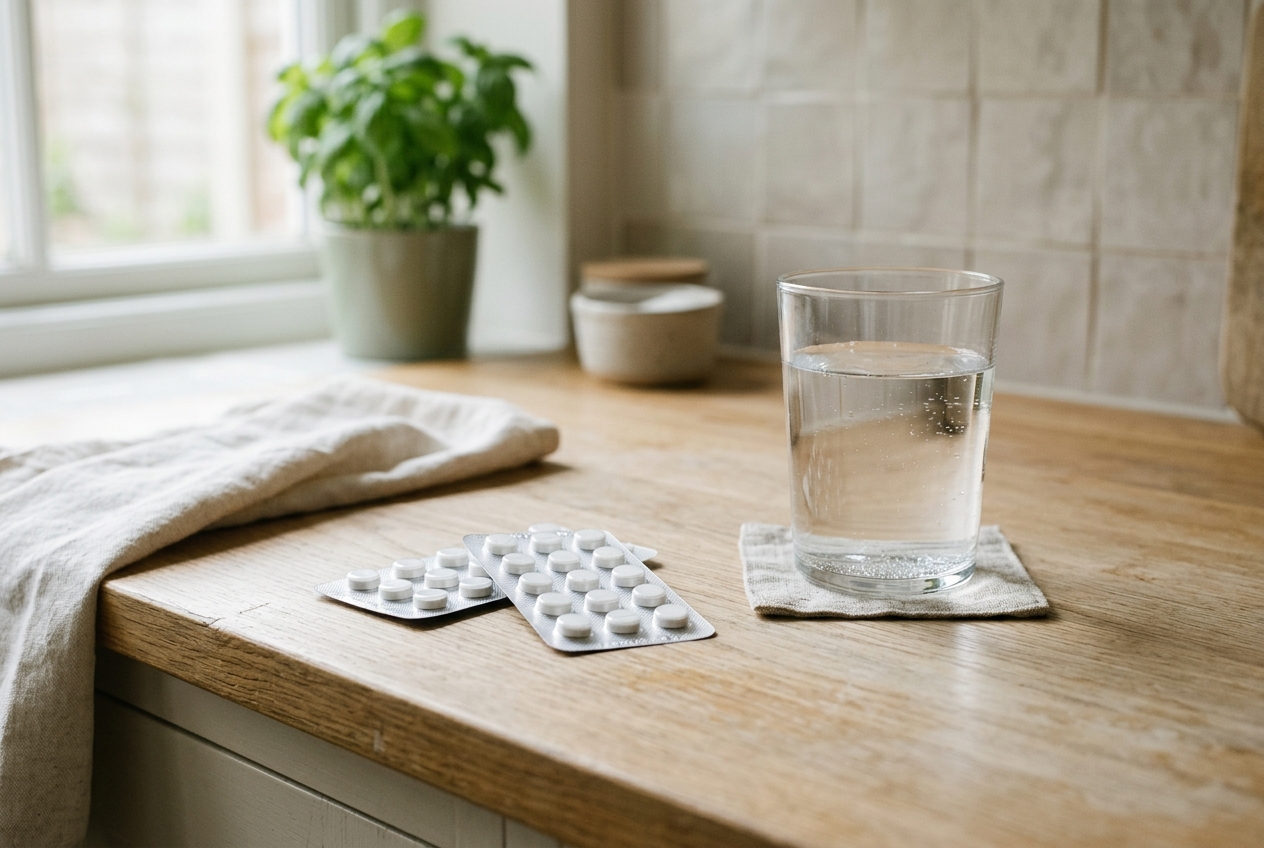
The real difference between Piriton and Piriteze is the drug inside, not the brand on the box. Both block histamine, the chemical your body releases during an allergic reaction that drives the itch, the redness and the welts. Where they differ is how much they cross into the brain, which is what decides whether they make you sleepy.
- Chlorphenamine (Piriton) is a first-generation antihistamine. It crosses into the brain readily, which is why it commonly causes drowsiness. It acts fast and clears quickly, so it is taken several times a day.
- Cetirizine (Piriteze) is a second-generation antihistamine. It was designed to act on histamine without crossing into the brain as much, so for most people it causes far less drowsiness and one dose covers a full day.
That is the whole story behind “is Piriton or Piriteze better”: there is no single winner, only a better fit for your situation.
Piriton (chlorphenamine): the fast, sedating option
Piriton is the brand name for chlorphenamine, a long-established first-generation antihistamine. First generation means it crosses into the brain more easily, which is why it tends to cause drowsiness.
For skin, that drowsiness is a genuine trade-off rather than a flaw:
- It tends to work quickly, which helps when hives or an itchy reaction come on suddenly.
- The sedating effect can be useful at night, when itch keeps you awake. Many people find a night-time dose helps them sleep through a flare.
- Because it is shorter-acting (around 4 to 6 hours), it is dosed several times a day, so it is less convenient for round-the-clock daytime cover.
The flip side: it is not ideal before driving, operating machinery, or any time you need to be sharp. Chlorphenamine also appears in some combined cold and flu remedies, so it is easy to double up by accident. Check labels so you are not taking it from two products at once.
Chlorphenamine is one of the antihistamines that may be considered during pregnancy, but this is a decision to make with a GP, midwife or pharmacist rather than off your own bat. Do not assume; ask.
A note on price and availability: branded Piriton tablets are sold in UK pharmacies and supermarkets (Boots, Superdrug and similar). They are not reliably listed as a standard Amazon UK product the way Piriteze is, so confirm the current pack price at a pharmacy. Generic chlorphenamine is also widely sold and is the same drug.
Piriteze (cetirizine): the once-a-day, non-drowsy option
Piriteze is a brand of cetirizine, a second-generation antihistamine. These were designed to act on histamine without crossing into the brain as much, so for most people they cause far less drowsiness.
For skin reactions, hives and hay fever, cetirizine is often the everyday workhorse:
- One dose usually lasts around 24 hours, so it covers a full day of itch from a single tablet.
- It is much less likely to make you drowsy, which suits work, school and driving.
- It is widely used for ongoing or recurring hives where you need steady, all-day control rather than a quick night-time hit.
Worth knowing: cetirizine is slightly more likely than some other non-drowsy antihistamines (such as loratadine) to cause mild drowsiness in a minority of people. If it makes you sleepy, that is not unusual, and a different second-generation option may suit you better. Cetirizine is the active ingredient in several brands, not just Piriteze, and supermarket own-label cetirizine is the same drug, often cheaper. As a price anchor, Piriteze tablets on Amazon UK run from around £3.49 for 7 tablets to £5.85 for 30 (checked June 2026; prices change).
Is Piriton or Piriteze better? Which to choose
There is no single winner. Match the medicine to the moment:
- Sudden hives or an itchy reaction, especially at night: Piriton (chlorphenamine) often suits, because it acts fast and the drowsiness can help you sleep.
- Hay fever or ongoing, recurring itch you need controlled all day: Piriteze (cetirizine), for the once-daily, non-drowsy cover.
- You need to drive, work or stay alert: lean non-drowsy, so Piriteze (or another second-generation antihistamine).
- You want the cheapest option: by active ingredient, own-label cetirizine is the same drug as Piriteze and usually costs less; check the box.
- It is for a child: the right product and dose depends heavily on age and weight. Both tablet ranges are generally from 6 years (check the pack), and there are children’s syrups for younger ages. Ask a pharmacist and use the children’s formulation where one exists. Do not split adult tablets to guess a child’s dose.
- One is not working: people respond differently. If a second-generation antihistamine like cetirizine is not controlling hives, a GP may suggest trying a different one, or adjusting how it is taken. Do not exceed the dose on the label without medical advice.
For persistent hives, antihistamines manage the symptom rather than the cause. If you are reaching for tablets most days, that is a sign to get the underlying trigger looked at. Our guide to hives and urticaria in the UK goes deeper on causes, triggers and when a flare needs more than a pharmacy fix. (Internal link target not yet live, sequence publish.)
Piriton or Piriteze for hives and skin reactions
For an itchy allergic rash or hives specifically:
- A flare that comes on fast, or itch that wakes you at night: Piriton (chlorphenamine) is the quicker, sedating choice.
- Hives that keep returning, or daily itch you need to control without feeling sleepy: Piriteze (cetirizine), once a day.
- Many people use a non-drowsy daily antihistamine as the base and keep a sedating one for bad nights, but check with a pharmacist before combining anything.
Neither tablet treats the cause of hives. They calm the histamine-driven itch, redness and welts while the trigger settles or is identified. If hives last more than six weeks (chronic urticaria), they need proper assessment rather than rolling pharmacy doses.
Tablets are not your only option
For a small, localised patch of itch, an antihistamine cream may be enough on its own, or alongside a tablet. There are pros and cons to topical antihistamines specifically, and they are not always the right call for widespread hives. See our breakdown of antihistamine creams in the UK before reaching for one. (Internal link target not yet live, sequence publish.)
If your skin reaction is to a product rather than pollen or food, the fix is identifying and avoiding the trigger. For one common culprit, see allergic reaction to sunscreen. (Internal link target not yet live, sequence publish.)
A few non-medicine basics also calm itchy skin: keeping cool, loose cotton clothing, avoiding hot showers, and not scratching (easier said than done). A pharmacist can point you to the simplest effective combination.
When to see a dermatologist or GP
Antihistamines are for mild, manageable allergic skin symptoms. Get medical help if:
- Hives keep coming back over several weeks, or never fully clear (this is chronic urticaria and benefits from proper assessment).
- The reaction is severe, spreading fast, or pharmacy antihistamines are not controlling it.
- You have hives alongside swelling of the lips, tongue, face or throat, difficulty breathing, a tight chest, or feel faint. This can signal a serious allergic reaction (anaphylaxis). Call 999 immediately; do not wait for an antihistamine to work.
- The skin is broken, weeping, blistering, or looks infected.
- You are pregnant, breastfeeding, choosing for a young child, or taking other medicines and are unsure what is safe.
A GP can investigate triggers and prescribe stronger options; a dermatologist can help with stubborn or recurrent skin reactions that are not settling. For how to arrange that, see how to see a dermatologist in the UK. (Internal link target not yet live, sequence publish.)
Frequently asked questions
What is the difference between Piriton and Piriteze?
Is Piriton or Piriteze better?
Which is the non-drowsy one, Piriton or Piriteze?
Can I take Piriton and Piriteze together?
Is Piriton or Piriteze better for hives?
Are these the same as supermarket own-brand allergy tablets?
Do antihistamines cure the rash, or just the itch?
Sources
- NHS: Antihistamines
- NHS: Chlorphenamine (Piriton)
- NHS: Cetirizine
- NHS: Hives (urticaria)
- BNF: Chlorphenamine maleate
- BNF: Cetirizine hydrochloride
- British Association of Dermatologists: Urticaria patient leaflet
- NICE: Urticaria / Clinical Knowledge Summaries
- DermNet: Antihistamines / Urticaria
- Piriteze tablet prices: Amazon UK, accessed via DataForSEO 22 June 2026