
Disclosure: this guide contains affiliate links. If you buy through them we may earn a small commission, at no extra cost to you. It never affects which products we include.
If you have eczema, the wash you use in the shower matters as much as the cream you put on afterwards. Most ordinary shower gels are built to foam, smell nice and strip away oil. That is exactly the wrong thing for eczema-prone skin, which is already short on the oils and barrier lipids that keep moisture in and irritants out.
This guide explains why standard gel irritates eczema, the ingredients that help and harm, and gives you a real “best for X” pick list with current UK prices, so you can choose a wash and move on.
Table of Contents
- 1 What should you wash with if you have eczema?
- 2 Why ordinary shower gel makes eczema worse
- 3 Emollient wash vs ordinary soap and shower gel
- 4 Ingredients to avoid (and to look for)
- 5 Best shower gels and washes for eczema in the UK (2026)
- 5.1 Best everyday emollient wash: Aveeno Dermexa Daily Emollient Body Wash
- 5.2 Best soap-free all-rounder: QV Gentle Wash
- 5.3 Best budget high-street pick: E45 Shower Cream
- 5.4 Best antimicrobial option: Dermol 500 Lotion
- 5.5 Best for babies and children: Aveeno Baby Dermexa Moisturising Wash
- 5.6 A note on “sensitive skin” shower gels from mainstream brands
- 6 What about bath and shower oils?
- 7 How to actually wash when you have eczema
- 8 When to see a GP or dermatologist
- 9 Frequently asked questions
- 10 Sources
What should you wash with if you have eczema?
The short answer
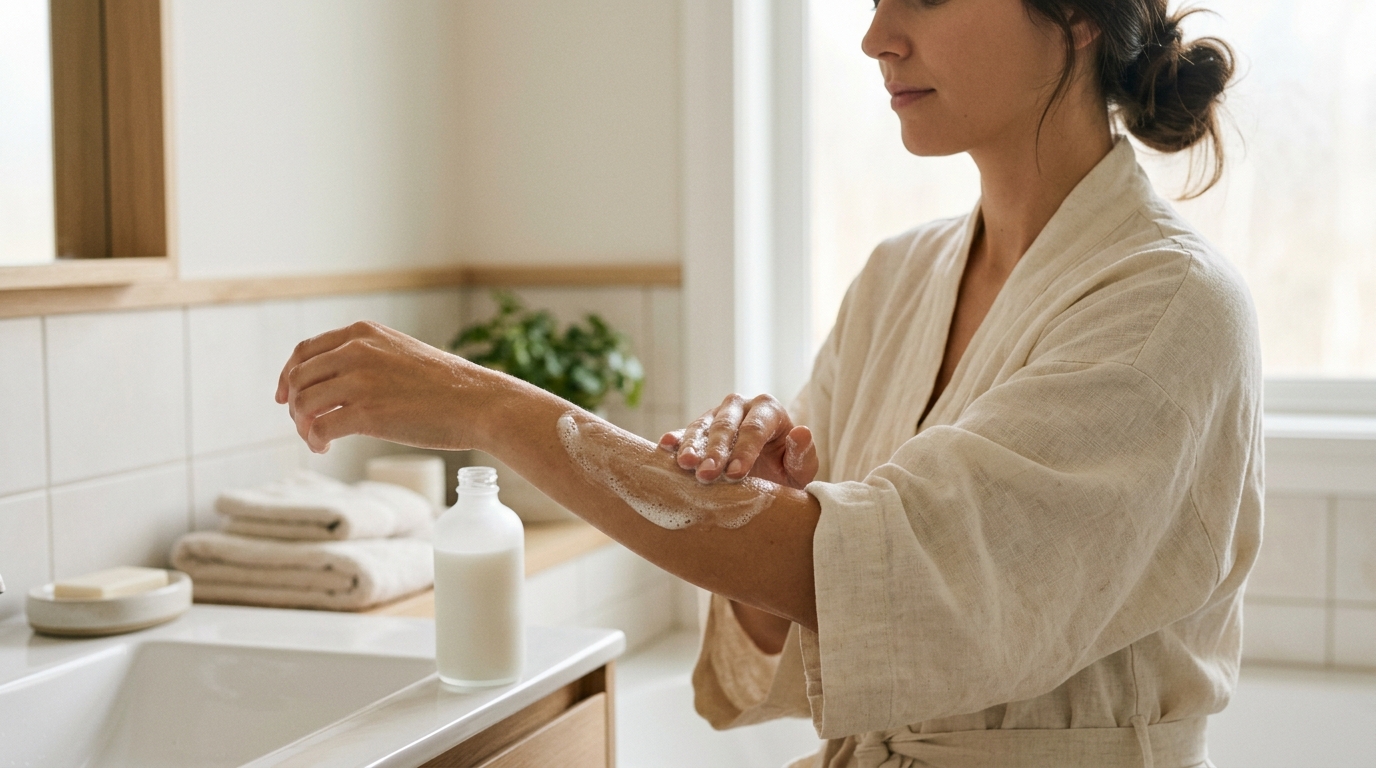
Skip standard foaming shower gel and use a soap-free emollient wash (a soap substitute) instead. Look for products labelled soap-free, fragrance-free and SLS-free; avoid anything that foams heavily, smells strongly, or lists fragrance/parfum or sodium lauryl sulfate (SLS) near the top. Emollient washes clean without the detergents that dry out skin, and many double as a leave-on moisturiser. The NHS and National Eczema Society both recommend a soap substitute rather than soap or ordinary shower gel for dry or itchy skin. The single highest-impact rule: with eczema, foam is not a sign that a wash is working. A good emollient wash barely lathers, and that is by design.
- Use a soap-free, fragrance-free emollient wash
- Avoid SLS, foaming agents and fragrance
- Wash gently, don’t scrub, and moisturise straight after
- Budget emollient washes work as well as premium ones
If you want the short version: an everyday soap-free wash like Aveeno Dermexa Daily Emollient Body Wash or QV Gentle Wash suits most adults; E45 Shower Cream is the cheapest high-street option; and for a baby or child, an Aveeno Baby Dermexa wash is a safe default. The rest of this page explains why, and when a stronger, antimicrobial option makes sense.
Why ordinary shower gel makes eczema worse
Eczema is a barrier problem. The outer layer of the skin is leaky, so water escapes and irritants get in, which drives the itch-scratch cycle. Anything that further degrades that barrier, including the surfactants (foaming agents) in most shower gels, tends to make eczema worse.
The mechanics are simple. The foam in a normal gel comes from detergents that lift oil off surfaces. On skin, that means they strip the natural oils your barrier depends on, and they nudge the skin’s surface pH upward, away from its naturally slightly acidic state. Both effects leave eczema-prone skin drier, tighter and more reactive after every wash. Fragrance compounds, common in scented gels, add a second problem: they are among the most frequent causes of contact reactions.
Swapping a foaming gel for a soap-free emollient wash is one of the cheapest, highest-impact changes most people with eczema can make. You are not adding a treatment so much as removing a daily irritant.
Emollient wash vs ordinary soap and shower gel
Here is the core difference in plain terms.
| Feature | Ordinary soap / shower gel | Emollient wash (soap substitute) |
|---|---|---|
| How it cleans | Detergents (surfactants) that foam and lift oil | Lipids and mild cleansers that lift dirt without stripping oil |
| Effect on skin barrier | Strips natural oils, raises skin pH, can dry and irritate | Leaves an oily or occlusive film that helps hold moisture in |
| Foam / lather | Lots of foam (the foam is the drying part) | Little or no foam, which is normal and expected |
| Fragrance | Usually fragranced | Best options are fragrance-free |
| Suitable for daily eczema use | Generally no | Yes, designed for it |
| Doubles as a moisturiser | No | Often yes (can be used as a leave-on emollient too) |
The takeaway: with eczema, foam is not a sign that something is working. A good emollient wash will barely lather, and that is by design.
Ingredients to avoid (and to look for)
You do not need to memorise a chemistry textbook. Focus on a short avoid-list and a short look-for list.
Avoid or be cautious with:
- Sodium lauryl sulfate (SLS) and similar harsh surfactants. These are the strong foaming agents in many shower gels. SLS is a known skin irritant and is best avoided on eczema-prone skin. (SLS is different from the gentler SLES, but if your skin is reactive, treating both with caution is sensible.)
- Fragrance and parfum. Fragrance is one of the most common causes of contact reactions. Look for “fragrance-free” rather than “unscented” (unscented can still contain masking fragrance).
- Essential oils and botanical extracts added for scent. “Natural” does not mean non-irritating; many botanicals are common triggers.
- Alcohol high up the ingredient list. Drying on an already-dry barrier.
- Antibacterial or strongly foaming “deep clean” formulas. Marketed as fresh and clean, but usually the most stripping.
Look for instead:
- Labels that say soap-free, fragrance-free, SLS-free, or suitable for eczema/sensitive skin.
- Familiar barrier-friendly ingredients: humectants like glycerin, and occlusives or emollients such as paraffin, mineral oil, dimethicone or colloidal oatmeal. Some washes contain ceramides, which are part of the skin’s own barrier.
- Products described as a soap substitute or emollient wash.
Best shower gels and washes for eczema in the UK (2026)
There is no single “best” wash for everyone, because the right pick depends on how dry your skin is, your budget, and whether you are buying for an adult, a baby or skin that keeps getting infected. Below are five soap-free options that fit the look-for list above, grouped by who they suit. Prices are Amazon UK listings checked on 23 June 2026 and move around, so treat them as a guide and confirm before buying. Many of these are also available cheaper on NHS prescription if a GP agrees it is appropriate.
| Best for | Product | Size | Price (Amazon UK, Jun 2026) | Soap-free / fragrance-free |
|---|---|---|---|---|
| Everyday emollient wash | Aveeno Dermexa Daily Emollient Body Wash | 300ml | £7.98 to £9.99 | Yes / yes (oat + ceramides) |
| Soap-free all-rounder | QV Gentle Wash | 500g | £6.96 to £10.99 | Yes / yes (15% glycerin) |
| Budget high-street pick | E45 Shower Cream | 200ml | £4.85 to £6.99 | Yes / yes |
| Antimicrobial soap substitute | Dermol 500 Lotion | 500ml | from about £8 to £12 in pharmacies (Amazon third-party listings run higher, around £18) | Yes / yes (antiseptic) |
| Baby and child | Aveeno Baby Dermexa Moisturising Wash | 250ml | £6.35 to £9.00 | Yes / yes (tear-free) |
Best everyday emollient wash: Aveeno Dermexa Daily Emollient Body Wash
A pump-bottle wash built specifically for very dry, itchy, eczema-prone skin. It is soap-free and unscented, and it pairs a soothing oat complex with ceramides, which are barrier lipids your skin already uses. It feels close to a normal shower routine (apply, lightly massage, rinse) without the stripping detergents, which makes it an easy switch for most adults. UK reviews repeatedly mention less itching and irritation on eczema-prone skin. At around £8 to £10 for 300ml it sits mid-range on price. Check the current price.
Best soap-free all-rounder: QV Gentle Wash
A pharmacy-grade, soap-free, fragrance-free wash from Ego Pharmaceuticals, built around 15% glycerin (a humectant that draws water into the skin). It is pH-balanced and free from colour, lanolin and propylene glycol, which makes it a sensible default for sensitive and reactive skin as well as eczema. The 500g pump is good value and lasts a long time. It does produce a light lather thanks to mild cleansers, which some people prefer over a near-foamless cream. Check the current price.
Best budget high-street pick: E45 Shower Cream
The cheapest genuinely eczema-suitable option here, and easy to find in UK supermarkets and chemists as well as online. It is a fragrance-free, soap-free shower cream that cleanses while leaving an emollient film, and it is dermatologically tested for very dry, sensitive and itchy skin. The trade-off for the low price is a small 200ml bottle and a creamy, near-foamless feel that some people miss. If you want to switch away from foaming gel without spending much, start here. Check the current price.
Best antimicrobial option: Dermol 500 Lotion
Dermol 500 is the classic UK antimicrobial emollient. Alongside the moisturising base, it contains antiseptics (benzalkonium chloride and chlorhexidine) intended to reduce the bacteria, including Staphylococcus aureus, that can build up on eczema-prone skin and trigger flares or infection. It works as both a leave-on moisturiser and a soap substitute. This is the pick to consider if your eczema repeatedly gets infected, weepy or crusted, ideally on a GP’s or pharmacist’s advice rather than as a routine first choice. Buy it from a pharmacy where it is usually cheaper (often around £8 to £12 for 500ml); third-party Amazon listings sit higher. Our guide to Dermol 500 lotion covers how this type of product works in more detail. Check the current price.
Best for babies and children: Aveeno Baby Dermexa Moisturising Wash
A soap-free, sulphate-free, dye-free and tear-free wash made for delicate baby and toddler skin that is very dry, itchy or eczema-prone. Like the adult Dermexa, it uses an oat complex and ceramides, and the tear-free formula makes it practical for hair-and-body use at bath time. UK parents consistently report less scratching and calmer skin. For a child old enough, the standard adult emollient washes above are also fine; this is simply the gentlest, eyes-friendly default for little ones. Check the current price.
A note on “sensitive skin” shower gels from mainstream brands
Some high-street brands now sell genuinely gentle, fragrance-free, SLS-free body washes aimed at sensitive and eczema-prone skin, and for mild eczema these can be a reasonable step up from a standard gel. Quality varies a lot, though. Read the label, not the marketing: if it foams heavily and smells strongly, it is probably not the one. When in doubt, the dedicated emollient washes above are the safer bet.
What about bath and shower oils?
Bath and shower emollient additives (oils you add to the water or apply in the shower to coat the skin) are a separate category. UK guidance has shifted here: large reviews, reflected in NICE guidance, found that bath additives add little benefit on top of regular leave-on emollients for many people. Some find them soothing for very dry skin, but do not rely on them as your main treatment, they make surfaces slippery, and they are not a substitute for moisturising after you wash.
How to actually wash when you have eczema
The product is only half of it. Technique matters too.
- Keep it lukewarm, not hot. Hot water strips oils and can trigger itch.
- Keep showers short. Long soaks dry the skin out.
- Be gentle. No scrubbing, loofahs or rough flannels. Use your hands.
- Pat dry, do not rub. Leave the skin slightly damp.
- Moisturise within a few minutes. Apply a generous leave-on emollient straight after to lock in water while the skin is still damp. This “soak and seal” step (similar to the often-cited three-minute rule) is where most of the benefit comes from.
- Use your soap substitute everywhere a foaming gel would normally go, including as a hand wash if your hands flare.
When to see a GP or dermatologist
Switching washes helps, but it is not a cure, and some signs mean you should get medical input rather than keep experimenting with products:
- The eczema is weeping, crusting, very red, hot or painful, which can signal infection (this is also when an antimicrobial wash like Dermol may be advised).
- It is not improving despite using a soap substitute and regular emollients.
- It is disrupting sleep, daily life or your child’s comfort.
- You think you may be reacting to a product (patch testing for contact allergy is something a dermatologist can arrange).
- You are relying on steroid creams often and want a proper management plan.
A GP can prescribe emollients and topical steroids and refer you to a dermatologist if needed. If the itch is the main problem, an oral antihistamine or a soothing cream may help alongside your wash routine, see our guide to antihistamine cream in the UK (page may not be live yet). For how to access dermatology care, including NHS referral routes and going private, see how to see a dermatologist in the UK (page may not be live yet). For more on the condition itself, see our overview of eczema in the UK (page may not be live yet).
Frequently asked questions
Which shower gel or body wash is best for eczema?
Can I use normal shower gel if I have mild eczema?
Why doesn’t my eczema wash foam?
Is fragrance-free the same as unscented?
Are bath oils worth it for eczema?
Should I moisturise before or after showering?
What is a soap substitute and how do I use it?
Sources
- NHS: Atopic eczema (treatment and self-care advice, including soap substitutes and emollients)
- NHS: Emollients (guidance that everyday soaps, shampoos and shower gels can worsen eczema; use a leave-on emollient as a soap substitute)
- National Eczema Society: washing and emollient guidance
- British Association of Dermatologists (BAD): patient information leaflets on emollients
- DermNet: emollients and eczema
- NICE: Atopic eczema in under 12s (guidance referencing soap substitutes and the limited added benefit of bath additives)
- Amazon UK product listings, accessed 23 June 2026: Aveeno Dermexa, QV Gentle Wash, E45 Shower Cream, Dermol 500 Lotion, Aveeno Baby Dermexa (cited for product details and prices, not endorsements)