

Disclosure: this guide contains affiliate links. If you buy through them we may earn a small commission, at no extra cost to you. It never affects which products we include.
You put sunscreen on to protect your skin, then your skin turns red, itchy or bumpy in exactly the spots you covered. It feels like a contradiction, but reactions to sunscreen are common, and most are manageable once you know what is going on. This UK guide explains how to tell an allergy from simple irritation, which ingredients usually cause it, what to do right now, and which mineral, fragrance free sunscreens to switch to.
Table of Contents
- 1 What an allergic reaction to sunscreen looks like and what to do
- 2 What a reaction to sunscreen looks like
- 3 Allergy vs irritation: they are not the same
- 4 Common culprit ingredients
- 5 Mineral vs chemical sunscreen for sensitive skin
- 6 What to do if you react
- 7 How to find a sunscreen that works for you
- 8 When to see a GP or dermatologist
- 9 Frequently asked questions
- 10 A note before you go
- 11 Sources
What an allergic reaction to sunscreen looks like and what to do
The short answer
An allergic reaction to sunscreen shows up as a red, itchy rash, small bumps or hives in the exact areas where you applied the product, sometimes within minutes but often delayed by 24 to 72 hours. It is usually one of three things: simple irritation (irritant contact dermatitis), a true allergy to a specific ingredient (allergic contact dermatitis), or a photoallergy that only flares once the ingredient meets sunlight. The usual triggers are chemical UV filters (oxybenzone, octocrylene, avobenzone, octinoxate), added fragrance, and preservatives such as methylisothiazolinone. What to do now: stop using the product, rinse the area with cool water, soothe it with a bland fragrance free moisturiser and short term hydrocortisone 1% if needed, and use an antihistamine for itching. Then switch to a fragrance free mineral (zinc oxide or titanium dioxide) sunscreen and patch test it before full use. See a GP if the rash is severe, spreading or not settling within a week, and call 999 for any swelling of the lips, tongue or throat or difficulty breathing.
- Could be irritant, allergic contact, or photoallergic dermatitis
- Common triggers: chemical UV filters, fragrance, preservatives
- Stop use, wash it off, soothe; an antihistamine helps the itch
- Switch to a mineral (zinc/titanium), fragrance-free SPF
The reassuring part: a genuine allergy to sunscreen as a whole is uncommon. Far more often the problem is one ingredient, not sun protection itself, so you usually do not have to give up SPF. You just need a different product.
What a reaction to sunscreen looks like
Reactions show up where you applied the product, which is a useful clue. Common signs of a sunscreen rash include:
- Redness or a pink flush
- Itching, or a stinging or burning feeling
- A bumpy or blistering rash
- Dry, flaky or scaly patches
- Hives (raised, itchy welts), sometimes within minutes
- Swelling, especially around thinner skin like the eyelids
Timing varies. Some reactions appear within minutes. Others are delayed and only show up a day or two after application, which is why people often blame the wrong product.
Why this matters: because reactions land only where the product touched, a rash in a clean line along your hairline, jaw or the edge of a sleeve is a strong hint that something you applied is the cause, not a general skin condition.
When to act fast: if you ever get swelling of the lips, tongue or throat, wheezing, or difficulty breathing after applying anything, treat it as a medical emergency and call 999. That is a sign of a severe allergic reaction (anaphylaxis), which is very rare with sunscreen but possible with any product.
Allergy vs irritation: they are not the same
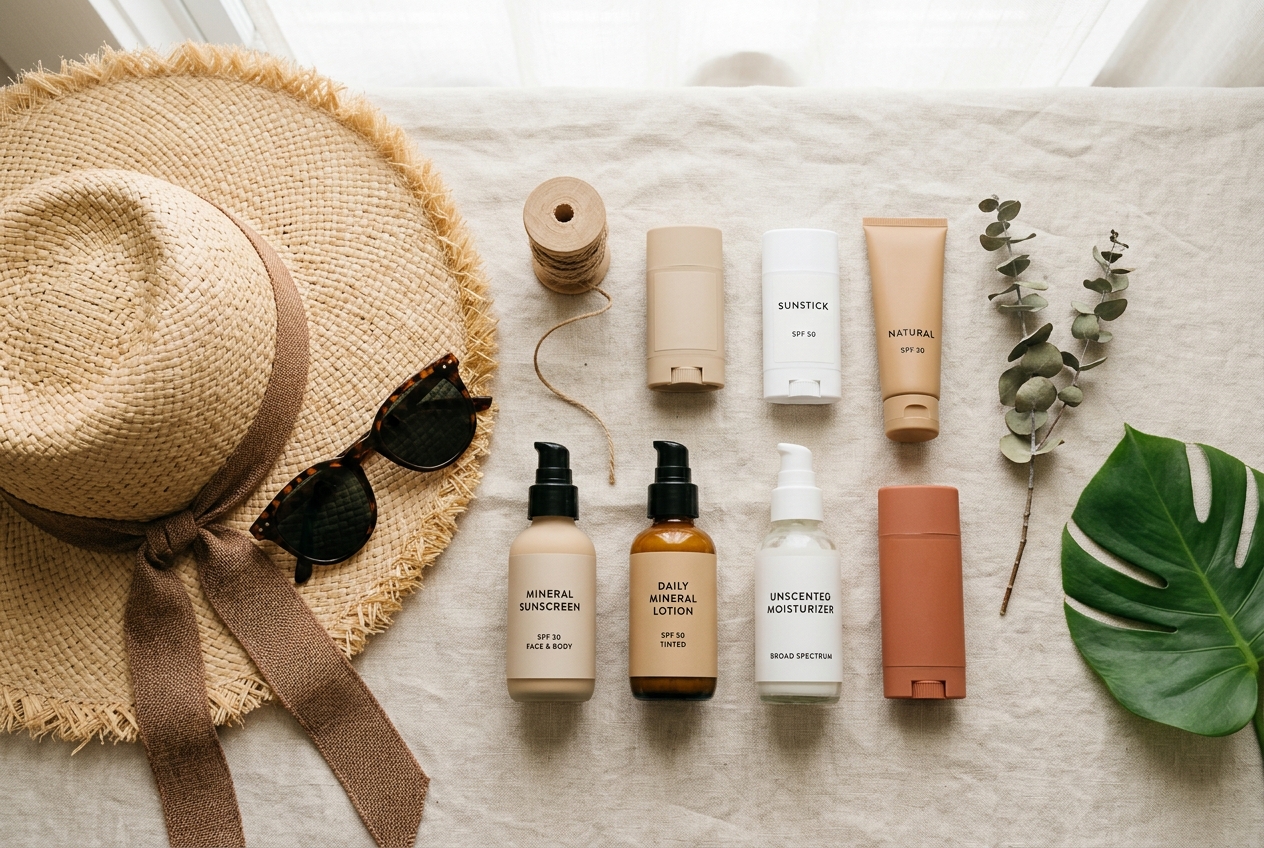
People use “allergy” loosely, but the distinction changes what you do next. The NHS draws the same line between irritant and allergic contact dermatitis.
| Irritant reaction (irritant contact dermatitis) | Allergic reaction (allergic contact dermatitis) | |
|---|---|---|
| What it is | Direct damage to the skin barrier from an ingredient, friction or heat | Your immune system reacting to a specific ingredient it has become sensitised to |
| How common | More common | Less common |
| Timing | Often soon after applying | Usually delayed, around 24 to 72 hours later |
| Triggered by | Often dose related: more product, more reaction | A specific allergen, even in small amounts |
| Typical feel | Stinging, burning, tightness | Itching, spreading rash, sometimes blistering |
| Settles when | You stop using the product and protect the skin | You identify and avoid the exact allergen |
There is also a third, less common pattern worth knowing about: a photoallergic reaction. Here an ingredient only causes a problem once it is exposed to sunlight, so the rash appears on sun exposed areas and can look a bit like sunburn or eczema. A specialist NHS dermatology service diagnoses it with photopatch testing, a version of patch testing done under controlled light.
The practical takeaway is the same for all three: stop the suspect product, calm the skin, and work out which ingredient is the problem rather than abandoning sun protection entirely.
Common culprit ingredients
A reaction usually traces back to one component, not the whole bottle. The usual suspects fall into a few groups.
Chemical (organic) UV filters
These absorb UV light. They are the more common cause of allergic and photoallergic reactions. Names to look for on a UK label include:
- Oxybenzone (benzophenone-3)
- Avobenzone (butyl methoxydibenzoylmethane)
- Octinoxate / octyl methoxycinnamate
- Octocrylene
- Cinnamates more broadly
Mineral (physical) UV filters
These sit on the skin and reflect or scatter UV. They are generally better tolerated, which is why they are the usual recommendation for sensitive skin and the standard mineral sunscreen for allergies. True allergy to them is rare, though not impossible:
- Zinc oxide
- Titanium dioxide
The “everything else” in the bottle
Often the filter is not the problem at all. The reaction comes from something added for texture, scent or shelf life:
- Fragrance / perfume (a very common trigger in skincare generally)
- Preservatives such as methylisothiazolinone (MI)
- Certain emulsifiers and solvents
This is why two “mineral” sunscreens can behave completely differently on your skin. The filter is the same, but the rest of the formula is not. It is also why a reaction can come from products you do not think of as sunscreen at all, since UV filters are added to some moisturisers, foundations and lip balms.
Mineral vs chemical sunscreen for sensitive skin
If your skin reacts easily, mineral sunscreen is the sensible default. Here is the honest comparison.
| Chemical (organic) filters | Mineral (physical) filters | |
|---|---|---|
| How they work | Absorb UV and convert it to heat | Sit on top and reflect or scatter UV |
| Reaction risk | Higher; main cause of sunscreen allergy and photoallergy | Lower; reactions are uncommon |
| Texture | Lightweight, sink in clear | Can feel thicker, may leave a white cast |
| Best for | Most people with no history of reactions | Sensitive, reactive or allergy prone skin, and children |
| Catch | Some filters are common allergens | The rest of the formula (fragrance, preservatives) can still trigger you |
Neither type is “safer” in a blanket sense. Mineral filters are simply less likely to be the allergen. But a heavily fragranced mineral sunscreen can still cause trouble, so read the full ingredient list, not just the filter type.
What to do if you react
A simple, sensible order of steps, in line with NHS contact dermatitis advice:
1. Stop using the product. Do not push through; that usually makes a contact reaction worse. 2. Rinse the area with cool water and a mild, fragrance free cleanser to remove residue, then pat dry. 3. Cool the skin. A cool, damp compress for 15 to 20 minutes at a time helps with itching and burning. 4. Soothe it. A bland, fragrance free moisturiser supports the barrier. Over the counter hydrocortisone 1% can calm a mild itchy rash for short term use, following the pack instructions. An antihistamine cream or an oral antihistamine can help with itching, though a pharmacist is the right person to confirm what suits you. 5. Photograph the rash and keep the bottle. This is genuinely useful if you see a GP or dermatologist later, and it helps you avoid the same ingredient next time. 6. Read the label. Note the UV filters, fragrance and preservatives so you can compare against your next product.
Do not buy a new “hypoallergenic” sunscreen and slather it on immediately. Patch test it first (see below).
How to find a sunscreen that works for you
The goal is to keep protecting your skin while you narrow down the trigger.
- Switch to a mineral sunscreen (zinc oxide and/or titanium dioxide) as your starting point.
- Choose fragrance free and look for formulas marketed for sensitive skin or labelled suitable for eczema prone skin. Marketing claims are not a guarantee, but they are a reasonable filter.
- Aim for at least SPF 30 with broad spectrum, high UVA protection. In the UK, look for the UVA star rating (ideally four or five stars) or the “UVA” in a circle alongside a high SPF, the markers the British Association of Dermatologists recommends.
- Patch test before full use. Apply a small amount to the inner forearm or behind the ear once a day for several days and watch for a reaction before putting it on your face or body.
- Change one thing at a time. If you swap brand, formula and filter type all at once and react again, you will not know what caused it.
Remember, sunscreen is one layer of sun protection, not the whole strategy. Shade, a hat, UV protective clothing (look for a UPF rating) and avoiding the strongest midday sun all reduce how much sunscreen has to do.
Mineral and fragrance free sunscreens to consider (UK)
These are widely available UK options for sensitive, reactive or allergy prone skin. None of them is guaranteed to suit you, so patch test first and check the full ingredient list for anything you have reacted to before. This is general guidance, not a personal recommendation or medical advice.
- Blue Lizard Sensitive Mineral Sunscreen SPF 50+ is a 100% mineral, zinc oxide, fragrance free option, which makes it a sensible first try if you suspect a chemical filter is the problem.
- Green People Scent Free Sunscreen SPF 50+ is a UK brand, fragrance free formula aimed at sensitive skin, useful if scent is your likely trigger.
- E45 SPF 50+ Sensitive Sun Cream for Face is a fragrance free, dermatologically tested facial SPF marketed for dry, sensitive and eczema prone skin. It uses chemical filters rather than mineral ones, so it suits people whose trigger is fragrance or a preservative rather than a UV filter.
If none of these work for you, a search for fragrance free mineral sunscreen SPF 50 for sensitive skin will show current UK stock so you can compare full ingredient lists.
A quick note for context: protecting your skin matters whether or not you tan, and skipping SPF is not a safe answer to a reaction. The fix is a kinder product, not no product.
If your child reacts to sunscreen
Mineral sunscreens are usually the better choice for children, and the same rules apply: fragrance free, broad spectrum, SPF 30 or higher, patch tested first. A fragrance free option such as Childs Farm Kids & Baby Sun Lotion SPF 50+ is a UK favourite for sensitive young skin. Lean harder on physical protection too, since a toddler in a wide brimmed hat and a UPF rash vest in the shade is far easier than wrestling a reactive cream onto squirming skin. If a rash is widespread, blistering or the child seems unwell, see a GP.
When to see a GP or dermatologist
Self care covers most mild reactions. Get medical advice if:
- The rash is severe, blistering, weeping or spreading beyond where you applied the product
- It is not settling within a week or so of stopping the product
- It keeps coming back and you cannot work out the trigger
- The reaction is on the face, especially around the eyes
- You have repeated reactions to several different sunscreens
For recurring or unexplained reactions, a GP can refer you to an NHS dermatology service for patch testing (or photopatch testing for a suspected photoallergy), which identifies the exact allergen so you can avoid it for good. This is available on the NHS via referral, and privately if you would rather not wait, with private costs varying between clinics. For how to access dermatology care in the UK, including NHS referral routes and going private, see how to see a dermatologist in the UK.
Seek urgent care (999) for any swelling of the face, lips, tongue or throat, or any difficulty breathing.
Frequently asked questions
What does an allergic reaction to sunscreen look like?
How do you get rid of a sunscreen allergy?
How long does a reaction to sunscreen last?
Why am I suddenly allergic to my sunscreen?
Can I be allergic to mineral sunscreen too?
What is the best sunscreen for sensitive skin in the UK?
Should I stop wearing sunscreen if I react?
A note before you go
This is general information, not medical advice. See a GP or dermatologist about your own skin, especially if a reaction is severe, recurring or not settling.
Sources
- NHS – Sunscreen and sun safety
- NHS – Contact dermatitis
- British Association of Dermatologists (BAD) – sunscreen and contact dermatitis patient information
- DermNet – Allergy to sunscreen / photoallergic contact dermatitis
- NICE CKS – Dermatitis (contact)