
Margaret stood in the pharmacy aisle holding two bottles, both promising firmer skin, neither explaining how. She’d noticed the change first on her upper arms: a fine, crepe-paper crinkling that her old body lotion did nothing for, no matter how thickly she layered it. If that’s the bottle you keep reaching for, here’s the honest answer: the right body moisturizer for crepey skin won’t be the quick-absorbing lotion built to soften dryness, because crepiness is structural thinning, not surface dehydration. A body moisturizer for crepey skin earns its place through actives like retinol, lactic acid, and peptides used consistently over roughly twelve weeks, not through richness alone. The good news is that the evidence is clear about what works and what’s marketing, and you can learn to read a label faster than the front-of-bottle copy can fool you.
Table of Contents
- 1 What Crepey Skin Actually Is (and Why It Isn’t Just Dryness)
- 2 Why Standard Body Lotions Fall Short
- 3 How a Body Moisturizer Can Actually Help Crepey Skin
- 4 The Ingredients That Matter for Crepey Skin
- 5 How to Choose the Right Product While Shopping
- 6 Using It So It Actually Works
- 7 Tailoring Your Approach to Specific Areas
- 8 Beyond the Bottle: Sun Protection and When to See a Dermatologist
- 9 Our Take
- 10 FAQs about body moisturizer for crepey skin
- 10.1 What is the best body moisturizer for crepey skin on arms and legs?
- 10.2 How long does a crepey skin body cream take to show results?
- 10.3 Can a body moisturizer actually tighten crepey skin, or do I need procedures?
- 10.4 Which ingredients should I look for in a body moisturizer for crepey skin?
- 10.5 Is retinol body lotion safe to use on crepey skin every day?
- 10.6 Should I use a body cream or a body oil for crepey skin?
- 10.7 Can I use exfoliating lotions and retinol together for crepey skin?
- 10.8 Are there specific moisturizers for crepey skin on the neck and chest?
- 10.9 Does drinking more water fix crepey skin, or is topical moisturizer more important?
- 10.10 Is a drugstore body moisturizer as good as a premium cream for crepey skin?
What Crepey Skin Actually Is (and Why It Isn’t Just Dryness)
Crepey skin is thin, finely wrinkled, slack skin with a crepe-paper texture that creases when you pinch or bend it and doesn’t spring back the way it once did. It shows up most on the upper arms, inner thighs, knees, neck, and chest. The cause is structural: collagen and elastin decline with age, the dermis thins, and decades of sun exposure accelerate the whole process. Ordinary dry skin is a surface problem, a lack of water and a stressed barrier that flakes and feels tight. Crepiness sits deeper. That’s exactly why people slather on the same lotion they’ve used for years and watch it do nothing. You’re treating a structural concern with a hydration tool, and the mismatch is the whole reason this product category exists.
Crepey Skin vs Deep Wrinkles vs General Dryness
Three things look similar at a glance and need different fixes. Deep wrinkles are folds set into the skin from repeated movement and volume loss. General dryness is surface dehydration that improves the day you moisturize properly. Crepiness reflects thinning and laxity across a broad area, not a single crease. Buy for the wrong one and you waste both money and months.
Where Crepey Skin Shows Up on the Body
The usual sites are the upper arms, inner thighs, knees, neck, decolletage, and the backs of the hands. The neck and chest have naturally thinner skin, so they crease earliest and tolerate the gentlest textures. The hands take constant friction and sun. Knowing where your crepiness concentrates tells you which texture and strength to reach for.
Why Standard Body Lotions Fall Short
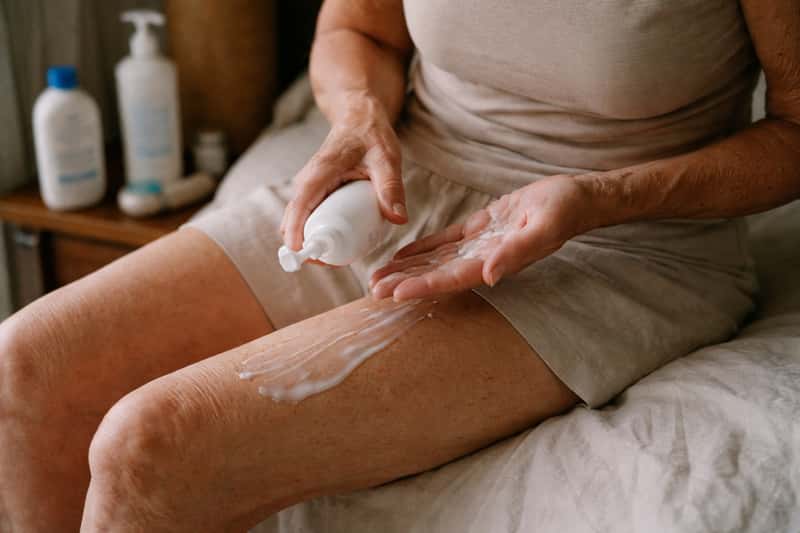
Most body lotions are engineered to soften and quickly absorb, which is great for dry shins and rough elbows. They do almost nothing for laxity. A lightweight lotion smooths the surface for a few hours, then the crepiness returns unchanged because the formula never touched the structural problem underneath. There’s no active in a basic bottle that stimulates collagen or thickens the epidermis. You can apply it three times a day and still see crinkling on your arms by evening. The gap between hydration and firming is real, and it’s where a targeted formula does its work.
The Difference Between Hydrating and Firming
Hydration plumps the top layers temporarily and improves how light reflects off the skin, so creping looks softer for a while. Firming actives work in the dermis over weeks, signaling collagen and thickening the epidermis. You want both. The trouble is that only the hydration half is in your average drugstore bottle, and the firming half is what crepey skin actually needs.
How a Body Moisturizer Can Actually Help Crepey Skin
Here’s the honest mechanism. A well-built body moisturizer for crepey skin improves appearance three ways: it repairs the barrier so water stays in, it delivers sustained hydration that plumps fine creping, and it carries actives that support collagen and epidermal thickening over time. A randomized split-body trial of a targeted firming moisturizer in women aged 40 to 60 found significant improvements in skin density, texture, and laxity after twelve weeks of twice-daily use, confirmed by ultrasound imaging of the dermis (PubMed, 2020). That’s meaningful. It also has a ceiling.
Realistic Results vs What Moisturizers Cannot Do
A topical product softens the look of crepey skin. It does not match radiofrequency, microneedling, or laser work for significant laxity, and no cream reverses aging. The same trial that proved improvement also measured modest, gradual change, not transformation. Knowing the ceiling keeps your spending sensible and your patience intact. Expect better, not new.
The Ingredients That Matter for Crepey Skin
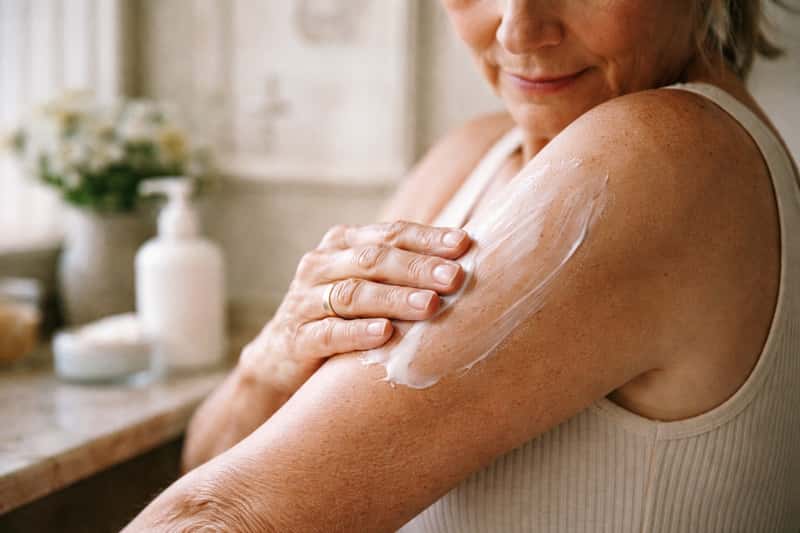
This is the buying core. Learn five categories and you can read any label and tell whether a product is engineered for crepiness or just rebranded body lotion. The actives should sit near the top of the ingredient list, where concentration is meaningful, not buried at the bottom for the marketing claim.
Humectants: Hyaluronic Acid, Glycerin, Urea
These pull and hold water in the skin, plumping fine creping and improving suppleness within days. Glycerin is the reliable workhorse and shows up in nearly every serious formula. Hyaluronic acid adds depth, and urea both hydrates and gently smooths, which helps on thirsty arms and legs. Humectants won’t firm on their own, but they make everything else feel and look better. The American Academy of Dermatology breaks down how these categories work in its guide to moisturizer types, and it’s worth a read before you shop.
Retinol and Retinoids
This is the most evidence-backed active for fine wrinkling and texture. Retinol stimulates collagen and thickens the epidermis over time, which is why body retinol has become a recognized category for crepey skin. Reviews of topical retinoids in photoaged skin document steady improvement in fine lines and dermal structure with consistent use. Expect a slow build over months, not an overnight change, and start a few nights a week to let thin skin adjust.
AHAs and Lactic Acid for Texture
Lactic acid and ammonium lactate exfoliate and increase epidermal turnover, smoothing crepey texture and offering genuine thickening benefits with regular use. A 12% ammonium lactate lotion is a dermatologist favorite for exactly this reason: affordable, practical, effective. These are your texture tools. Use them on a schedule, a few nights a week, and not on the same night as retinol.
Peptides, Ceramides, and Antioxidants
Peptides signal support for firmness, ceramides rebuild the barrier so hydration stays put, and antioxidants like niacinamide and vitamin C help defend against further photoaging. None of these is a hero on its own. Together they round out a formula that does more than sit on the surface, and they soften the irritation that stronger actives can cause on thin skin.
How to Choose the Right Product While Shopping
Turn that ingredient knowledge into a checklist you can run standing at a shelf or scrolling a product page. Three things matter more than the front-of-bottle promise: the texture, the position of the actives in the ingredient list, and whether the formula is built for the body rather than a face cream scaled up. If a product names retinol or lactic acid on the front but lists them dead last, it’s selling a claim, not a dose.
Texture and Format: Cream, Lotion, or Oil
Richer creams suit dry, crepey limbs and the chest because they hold more humectants and emollients in contact with the skin. A body oil layered over a moisturizer helps on very dry patches, but oil alone carries no firming actives, so it can’t do the structural work. Match format to site: cream on dry arms and thighs, lighter textures on the neck.
Reading the Label and Spotting Red Flags
Look for actives near the top of the list. Watch for heavy fragrance and high-strength exfoliants that can sting thin, reactive skin. If you’re sensitive or eczema-prone, lean toward fragrance-free, barrier-supporting formulas, ideally with colloidal oatmeal. A product loaded with perfume and short on actives is a candle, not a treatment.
Drugstore vs Premium: What You’re Actually Paying For
Price often buys sensory experience, packaging, and a nicer scent, not better results. The evidence-backed actives appear in affordable options too: a $15 ammonium lactate lotion and a $90 firming cream can carry the same working ingredient. Decide what you value before you spend. If twelve weeks of twice-daily use is the real lever, an $18 jar you’ll actually finish beats a $120 one you ration.
Using It So It Actually Works
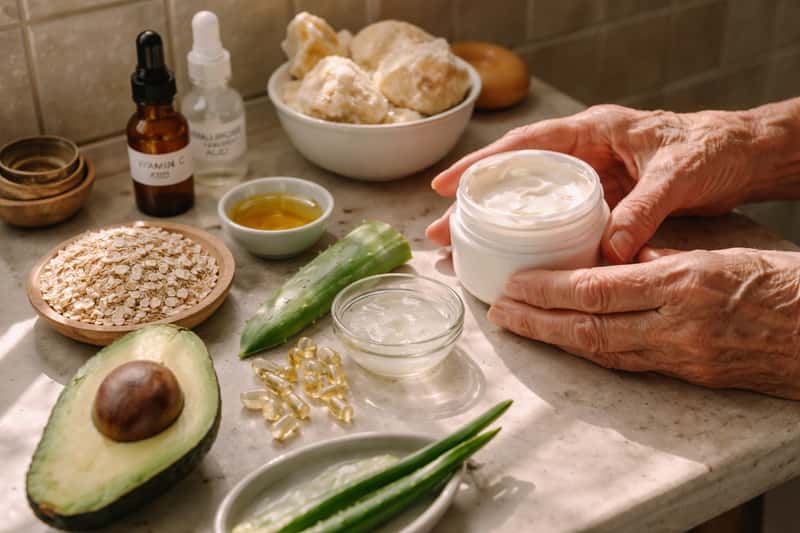
Product choice is only half the equation. The clinical evidence showed results came from twice-daily use across roughly twelve weeks, which means consistency is the genuine lever, not the brand on the lid. Treat your moisturizer like a long-term routine, the way you’d treat a medication you take morning and night. The hero cream most people chase matters far less than the boring habit of showing up daily for three months. If you can’t sustain a regimen, a fancier bottle won’t save it.
Frequency, Timing, and Application
Apply twice daily, ideally onto slightly damp skin right after bathing to trap moisture. Massage upward on arms and legs in slow strokes. Then wait. Give any product a full three months before you judge whether it’s working, because that’s the window where the trial measured real change.
Layering Retinol, Exfoliants, and Moisturizer Safely
Don’t combine strong AHAs and retinol on the same night; thin skin can’t take both at once. Alternate them across the week and buffer with a barrier-supporting moisturizer to limit irritation. A simple schedule you can keep beats an aggressive one that leaves you red and quitting by week two.
Tailoring Your Approach to Specific Areas
Different body sites need different handling. The neck and decolletage are delicate and crease early. Arms and thighs tolerate richer treatment and stronger actives. Hands take constant abuse and sun, so they need both protection and repair. Adjusting texture and active strength by zone is the difference between a routine that works and one that irritates.
| Body area | Skin character | Best texture | Active strength |
|---|---|---|---|
| Neck and chest | Thin, creases early | Light, well-buffered cream | Gentle, low-dose |
| Upper arms and thighs | Tolerant, often dry | Rich cream | Standard retinol and AHA |
| Backs of hands | Sun-exposed, abused | Cream plus daily SPF | Moderate, with protection |
Neck, Chest, and Hands
Use gentler actives and lighter, well-buffered textures on the neck and chest, where overdoing it shows up as redness fast. Treat the backs of the hands as a priority sun zone, since they crease early and sit in daylight all day. These delicate areas reveal crepiness first and reward steady, patient care more than aggressive treatment.
Beyond the Bottle: Sun Protection and When to See a Dermatologist

A moisturizer works best alongside daily broad-spectrum sunscreen, because photoaging drives crepiness in the first place and unprotected skin keeps thinning while your cream tries to thicken it. Stable weight, not smoking, and adequate protein all support the structure you’re trying to preserve. When laxity is extensive, when crepiness covers large areas, or when you want results a cream can’t reach, that’s the point to book a professional assessment rather than buying a fourth jar. A dermatologist can tell you honestly where topicals end and procedures begin.
Our Take
The best body moisturizer for crepey skin is the one you’ll actually use twice a day for three months, built around retinol, lactic acid, and peptides rather than fragrance and a pretty label. Crepiness responds to consistency far more than to price, so pick a formula you can sustain, pair it with daily SPF, and judge it at twelve weeks. If your skin’s laxity runs deeper than a cream can reach, see a dermatologist before you spend another penny on the shelf.
FAQs about body moisturizer for crepey skin
What is the best body moisturizer for crepey skin on arms and legs?
The best option pairs humectants like glycerin and hyaluronic acid with proven actives such as retinol or lactic acid, in a rich cream texture. Concentration and consistent use matter more than brand prestige.
How long does a crepey skin body cream take to show results?
Plan on roughly twelve weeks of twice-daily use. The clinical trial that measured real firming saw improvements in skin density and texture only after three months, so judge any product on that timeline, not the first week.
Can a body moisturizer actually tighten crepey skin, or do I need procedures?
A well-formulated moisturizer softens the look of crepiness through hydration, barrier repair, and collagen-supporting actives. It won’t match radiofrequency, microneedling, or laser results for significant laxity, which require professional treatment.
Which ingredients should I look for in a body moisturizer for crepey skin?
Look for retinol, lactic acid or ammonium lactate, peptides, hyaluronic acid, glycerin, urea, and ceramides. These should sit near the top of the ingredient list, not buried at the bottom behind fragrance.
Is retinol body lotion safe to use on crepey skin every day?
Start a few nights a week and build up as your skin adjusts, since thin crepey skin irritates easily. Many people tolerate nightly use eventually, but slow introduction and a buffering moisturizer reduce redness and peeling.
Should I use a body cream or a body oil for crepey skin?
A richer cream is the better base because it can carry firming actives. A body oil layered on top helps very dry patches, but oil alone delivers no collagen-supporting ingredients.
Can I use exfoliating lotions and retinol together for crepey skin?
Not on the same night. Alternate strong AHAs and retinol across the week and buffer with a barrier-supporting moisturizer, because combining them irritates already-thin skin and makes the routine hard to sustain.
Are there specific moisturizers for crepey skin on the neck and chest?
Choose gentler, well-buffered textures and lower active strength for the neck and chest, since the skin there is thin and creases early. Fragrance-free, barrier-supporting formulas reduce irritation in these delicate zones.
Does drinking more water fix crepey skin, or is topical moisturizer more important?
Hydration from within supports overall skin health, but it won’t reverse structural thinning. Topical moisturizers with actives, applied consistently, do far more for the appearance of crepiness than water intake alone.
Often yes. Evidence-backed actives like ammonium lactate appear in affordable products, and price mostly buys scent, texture, and packaging. The cheaper jar you finish beats the luxury one you ration.