
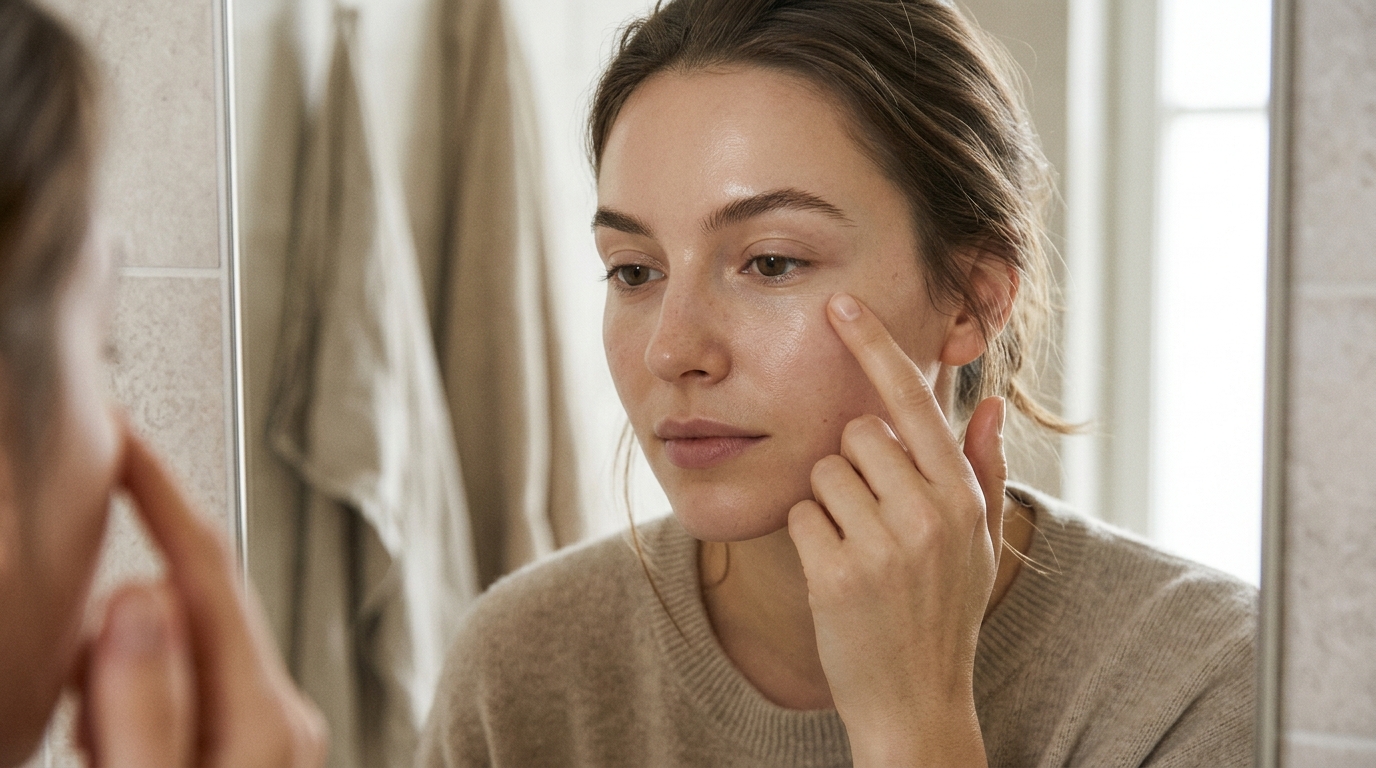
Milia are the tiny, hard white bumps that show up most often around the eyes, on the cheeks, and across the nose. They are not spots, they are not blackheads, and they will not pop. That last point is the one that trips most people up: a milium sits in a sealed pocket under the surface of the skin, so squeezing it does nothing except bruise and inflame the area.
This guide gives you the honest version: what milia actually are, why you get them, what genuinely works to get rid of them, what professional removal involves, and what it really costs in the UK in 2026, with published prices from named clinics so you can see the true spread. We are not a clinic and we do not sell removals, so this is written from your side, including the times when the best move is to leave them alone.
Table of Contents
- 1 How do you get rid of milia?
- 2 What are milia?
- 3 What causes milia?
- 4 Why you should never squeeze or pick milia at home
- 5 How to get rid of milia at home
- 6 In-clinic milia removal: what actually happens
- 7 At-home care vs professional removal: which should you choose?
- 8 How much does milia removal cost in the UK?
- 9 Can you get milia removed on the NHS?
- 10 How to prevent milia coming back
- 11 When to see a GP or dermatologist
- 12 Frequently asked questions
- 13 Sources
How do you get rid of milia?
The short answer
You get rid of milia in one of two ways: gentle skin-cell turnover at home over several weeks, or a quick professional extraction that opens the skin over each milium with a sterile fine needle and lifts the keratin out. Do not squeeze or pick at them. A milium is a sealed cyst with no opening to the surface, so pressure cannot push the contents out and only risks bruising, infection and scarring, which is especially serious near the eye. At-home care means a salicylic acid or AHA exfoliant and often a retinoid, plus swapping heavy eye creams for lighter ones. Professional needle extraction is fast and close to painless, and in the UK typically costs from around £105 to £200 for a small number of milia, plus a consultation fee. Milia are harmless, and many clear on their own.
- Milia are tiny keratin cysts, usually harmless
- Don’t squeeze or pick them at home
- Safe removal = professional de-roofing/extraction
- Retinoids can speed turnover; see a GP if unsure what it is
If you only take one thing from this page: milia respond to skin turnover and to proper extraction, never to squeezing. The rest of this guide breaks down both routes, the real prices, and how to tell milia apart from the look-alike bumps that need different treatment.
What are milia?
Milia (one is a “milium”) are small cysts filled with keratin, the protein that makes up the outer layer of your skin. They look like firm white or yellowish bumps, usually 1 to 2 mm across. Unlike a whitehead, there is no opening to the surface, no redness, and no soreness. They feel like a tiny grain of sand or grit trapped just under the skin. You might have one or, as several UK clinics note, a cluster of five to ten or more.
They are most common around the eyes (milia under the eyes are the classic case) and on the cheeks, but they can appear anywhere, including the forehead, the chest, and occasionally elsewhere on the body. Having one or a small cluster is normal.
Milia vs other bumps (and the look-alikes that need a doctor)
People often mistake other things for milia, and the treatment is completely different, so it is worth getting the identification right before you act. Two in particular get confused with milia around the eyes: syringoma and xanthelasma.
| Bump | How it looks and feels | Pops or squeezes? | Usual approach |
|---|---|---|---|
| Milia | Small, firm, white or yellow, 1-2 mm, no opening, not sore | No | Gentle turnover at home or professional extraction |
| Whitehead (closed comedone) | Soft white spot with a visible head | Sometimes, but best left | Salicylic acid, normal acne care |
| Blackhead (open comedone) | Dark plug in an open pore | Sometimes | Exfoliating acids, retinoids |
| Syringoma | Soft, skin-coloured to slightly yellow bumps, often clustered under the eyes, tend to recur after treatment | No | Needs professional diagnosis; not removed the same way as milia |
| Xanthelasma | Soft, flat, yellowish plaques on or near the eyelids, can signal raised cholesterol | No | See a GP; needs medical assessment, not cosmetic extraction |
| Sebaceous hyperplasia | Soft yellowish bumps with a tiny central dip | No | Professional diagnosis |
The practical rule: a true milium is a small, hard, white-to-yellow dome with no opening. If a bump is flat and yellow (think xanthelasma), soft and recurring in a cluster under the eyes (syringoma), or it is changing, then it is not a routine milium and squeezing or DIY extraction is the wrong move. When in doubt, get it looked at first.
What causes milia?
Milia form when keratin and dead skin cells get trapped in a small pocket near the surface instead of shedding normally. Common contributors include:
- Skin trauma or irritation. Burns, blistering, sun damage, aggressive treatments, or even a graze can lead to so-called secondary milia in the healed area.
- Heavy or occlusive products. Thick eye creams and rich balms can sit on thin skin and trap cells underneath, which is one reason milia cluster around the eyes.
- Age. Skin cell turnover naturally slows as we get older, so mature skin tends to hold onto milia longer.
- Sun damage. Long-term UV exposure thickens and damages the outer skin, which is linked to milia, so daily SPF is both prevention and general skin health.
- Newborn skin. In babies, “milk spots” are extremely common and harmless, and they clear by themselves within a few weeks. These never need treatment.
Milia are not contagious and are not a sign of poor hygiene. As Skin Surgery Clinic puts it plainly, they are simply a build-up of dead skin cells or keratin.
Why you should never squeeze or pick milia at home
This is the core thing to understand. A whitehead has a path to the surface, so pressure can push the contents out. A milium does not. It is a fully enclosed sac of keratin sitting under intact skin.
When you squeeze or pick a milium:
- The keratin has nowhere to go, so nothing comes out.
- You bruise and inflame the surrounding tissue.
- You risk breaking the skin, which invites bacteria and infection.
- On healing, that trauma can trigger a fresh milium, so you can actually make the situation worse.
- Near the eye, where the skin is at its thinnest, you risk damage and scarring in a very visible spot.
To genuinely remove a milium, the thin layer of skin over it has to be opened with a sterile, fine tool so the keratin pearl can be lifted out cleanly. That is a precision job done in a clean environment with medical training, not a pinch in front of the bathroom mirror.
How to get rid of milia at home
For most people, the sensible first step is gentle, consistent skincare aimed at encouraging the trapped cells to clear. This will not “dissolve” an existing milium overnight, but over weeks it can help small ones resolve and reduce new ones forming. It is the approach Healthline, Verywell Health and UK clinics all converge on for at-home care.
What tends to help:
- A leave-on exfoliant. Salicylic acid (a BHA) and gentle alpha-hydroxy acids like glycolic or lactic acid support skin cell turnover. Use a low strength and build up slowly. These are the most commonly recommended over-the-counter actives for milia.
- A retinoid. Over-the-counter retinol, or a prescription retinoid from a GP or dermatologist, is one of the better-evidenced options for nudging cell turnover and is often suggested for stubborn or recurring milia. Introduce it slowly to avoid irritation.
- Lighter products around the eyes. Swap thick, occlusive eye creams for a lighter formula. If milia keep appearing in one spot, the product you are using there is a prime suspect.
- Daily SPF. Sun damage is a known contributor, so broad-spectrum SPF every day is both prevention and general skin health.
- Patience. Many milia, especially primary ones in adults, clear on their own given time. In babies they always do.
What to avoid:
- Comedone extractors, lancets, or needles at home. Tempting, but the infection and scarring risk is real, especially near the eye.
- Harsh physical scrubs, which irritate without opening the milium. Exfoliation may reduce future milia but will not uncover the trapped material in an existing one.
- Picking, full stop.
For milia specifically around the eyes, we go deeper in our guide on white spots under eyes, including the eye-cream swaps that make the biggest difference.
This is general information, not medical advice. Patch test new actives, introduce one at a time, and stop if your skin reacts.
In-clinic milia removal: what actually happens
If milia are persistent, numerous, or somewhere you would rather not wait out, a professional can remove them quickly. The standard UK method is simple and usually takes minutes.
De-roofing and needle extraction (the standard method)
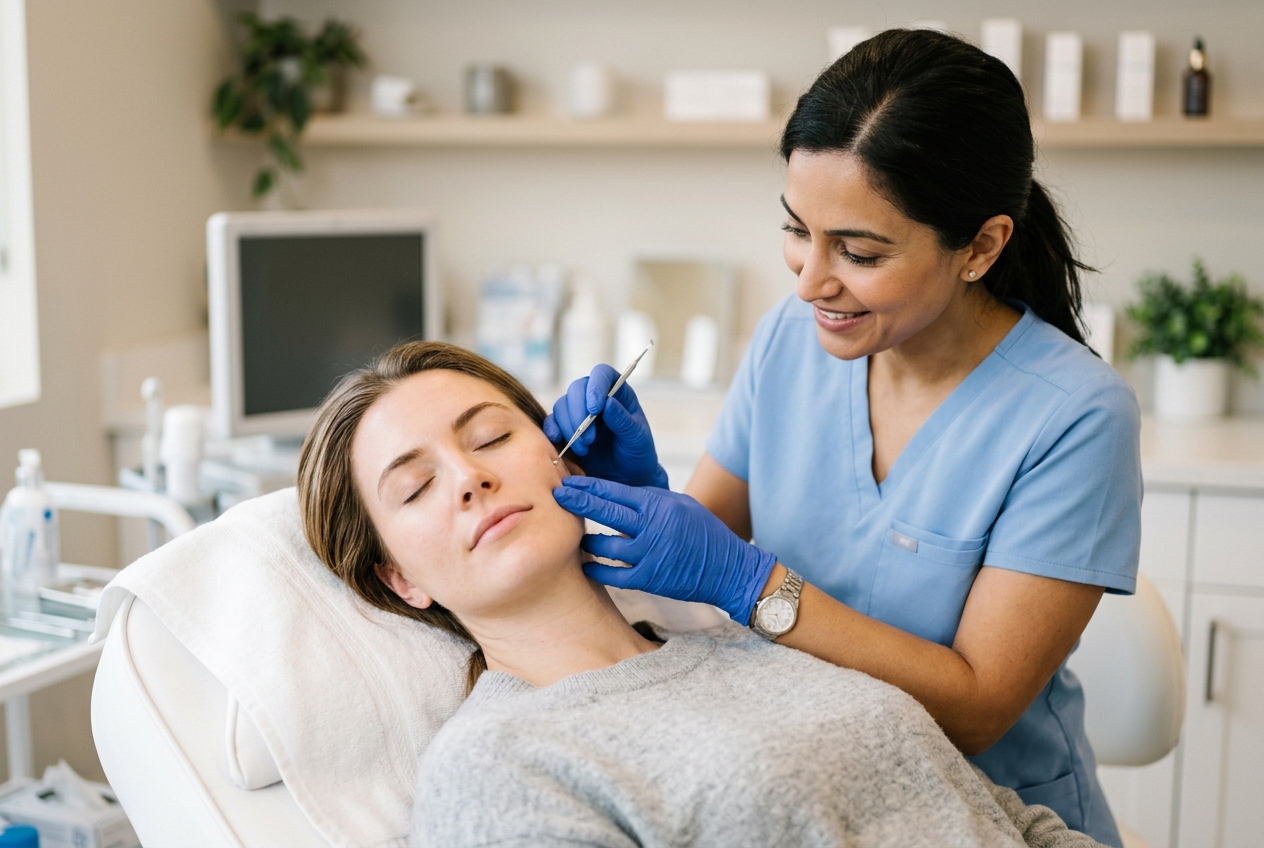
This is what nearly every UK milia clinic does, and it is the method sk:n, Skin Surgery Clinic and Midland Skin all describe. The area is cleaned, then a practitioner uses a sterile fine needle or lancet to make a tiny opening (sometimes called de-roofing) in the skin over the milium and gently lifts out the keratin pearl, often with a comedone extractor. It is generally described as quick and close to painless, with little or no downtime beyond brief redness. Midland Skin describes the procedure as taking around 5 to 10 minutes with a tiny wound that scabs and heals in three to four days. Several milia can usually be done in one sitting.
Cryotherapy and other professional options
- Cryotherapy (freezing). Some clinics use controlled freezing for certain lesions. It is more commonly used for warts and similar lesions than for ordinary facial milia, and is offered after assessment.
- Topical prescription treatment. For certain types, a prescription retinoid or other topical may be advised instead of physical extraction.
- Electrocautery or laser. Used in some clinics for specific or harder-to-reach cases. These are less commonly needed for ordinary facial milia and should only be done by a suitably trained professional.
A good clinic will assess the bumps first to confirm they are actually milia, because, as covered above, several other conditions look similar and are treated differently. sk:n, for example, runs a doctor consultation before treatment, and Skin Surgery Clinic carries out a medical assessment where necessary.
At-home care vs professional removal: which should you choose?
| At-home care | Professional extraction | |
|---|---|---|
| Best for | A few small milia, no rush, prevention | Persistent, numerous, or eye-area milia, or you want them gone now |
| Speed | Weeks to months | Often a single short appointment of 15 to 30 minutes |
| Cost | Price of skincare (exfoliant, retinoid, SPF) | A consultation plus a removal fee from around £105 (see prices below) |
| Risk if done properly | Low | Low, in trained hands |
| Risk if done wrong | Irritation from overusing actives | High if you DIY: infection, scarring near the eye |
| Eye-area milia | Lighter eye cream only, no tools | Recommended route |
The honest summary: if you have a couple of small milia and you are patient, start at home. If they are clustered, stubborn, or right by your eye, a quick professional extraction is the safer and faster call.
How much does milia removal cost in the UK?
Professional milia removal in the UK typically costs from around £105 to £200 for a single session on a small number of milia, plus a consultation fee that ranges from about £45 to £235. Larger numbers in one session cost more, with national chain sk:n charging up to £1,000 for up to ten milia and £1,500 for up to twenty. Milia removal is cosmetic, so it is generally not available on the NHS unless there is a specific clinical concern. Many clinics put the consultation fee towards your treatment cost, which is worth asking about.
Here are actual published 2026 prices from named UK clinics, so you can see the real spread rather than a vague range. Confirm directly with the clinic before booking, as prices change and depend on how many milia you have and where they are.
| Clinic | Location | Consultation | Removal price | Notes |
|---|---|---|---|---|
| Inskin Skin Clinic | Altrincham, Manchester | £45 (with test patch, redeemed against treatment) | £105 for a 15-min session; £155 for 30 min; £130 per spot on the eyelash line | Per-session and per-spot pricing |
| sk:n Clinics | National (CQC-regulated) | Doctor consultation from £185 (limited-time redeemable offer) | Single treatment from £200; per additional up to 4 milium £125; up to 10 milium £1,000; up to 20 milium £1,500; over 20 milium £1,800 | Banded by number of milia |
| Skin Surgery Clinic | Tyneside and Yorkshire | Free nurse assessment / online consultation; consultant dermatologist £225 | Quoted after assessment | Needle extraction by a skin practitioner |
| Midland Skin | Birmingham | Same-day consult worth £235 (still applies if no procedure) | Priced by lesion count (1-3, 4-7, 7+); cryotherapy £175-£275 per visit | Doctor-led, photo triage available |
A few things to read from that table. First, eye-area and eyelash-line milia often carry a per-spot premium (Inskin charges £130 per spot on the lash line), because that skin is delicate and the work is fiddly. Second, the way clinics band their pricing differs sharply, from per-session (Inskin) to per-number-of-milia (sk:n) to per-lesion-count (Midland), which is why a direct price comparison is awkward. Third, the consultation fee is a real cost, anywhere from £45 to £235, so always ask whether it is separate, and whether it is redeemed against treatment if you go ahead.
What drives your final milia removal price
- How many milia you have. A single milium or a small cluster is at the cheap end; a face full of them moves you into the higher bands (up to £1,000 to £1,800 at sk:n for 10 to 20+).
- Where they are. Eyelid and eyelash-line milia are more delicate and often priced per spot.
- Whether the consultation is separate or redeemable. This can swing your total by a couple of hundred pounds.
- Who does it. A consultant dermatologist costs more than a skin practitioner or aesthetic nurse, but adds diagnostic certainty if there is any doubt about what the bumps are.
Can you get milia removed on the NHS?
In almost all cases, no. Milia are harmless and removing them is treated as cosmetic, so the NHS will not generally fund it and you should expect to pay privately. This is the same logic the NHS applies to skin tags and other benign cosmetic lesions.
There are narrow exceptions, usually where there is genuine clinical doubt about the diagnosis or an associated medical problem, and these are decided case by case by your GP and local NHS rules, not guaranteed. If you are unsure what the bumps are, the right first step is to see your GP, who can confirm the diagnosis (and rule out look-alikes such as xanthelasma) even if any cosmetic removal ends up being private. For how the routes work, see how to see a dermatologist in the UK.
How to prevent milia coming back
You cannot guarantee milia never return, but a few habits genuinely reduce how often they form:
- Keep up gentle exfoliation. Regular, mild chemical exfoliation (salicylic or glycolic acid) supports turnover so cells shed instead of getting trapped.
- Use lighter products around the eyes. Heavy, occlusive eye creams and balms are a classic trigger. Switch to a lighter formula, especially if milia keep returning in the same spot.
- Wear SPF daily. Sun damage is a recognised contributor, so daily broad-spectrum protection is prevention as well as anti-ageing.
- Do not over-treat skin trauma. Aggressive scrubs, harsh peels and picking can all cause secondary milia in the healed skin.
- Consider an ongoing retinoid if you are prone to recurring milia, introduced slowly and ideally with professional advice.
When to see a GP or dermatologist
Milia themselves are harmless, but see a professional if:
- You are not certain the bumps are milia. Several other skin lesions look similar and need different management. Flat yellow plaques near the eyelids (xanthelasma) and soft clustered under-eye bumps (syringoma) are the most important to rule out.
- The bumps are growing, changing, bleeding, crusting, itchy, or sore. Those are not typical milia features and deserve a proper look.
- Large numbers appear suddenly, or they sit on a red, raised patch (a rarer form called milia en plaque).
- You want them removed safely rather than risking it yourself, particularly around the eyes.
- Home care over a few months has made no difference and they bother you.
A GP can confirm what they are and, where relevant, refer you on or prescribe a topical. For cosmetic removal you will usually go private. If you are weighing milia removal against removing another type of mark, our guide to skin tag removal cost in the UK follows the same buyer-first, real-prices approach, and how to see a dermatologist in the UK walks through the NHS referral route and the private options.
Frequently asked questions
How do you get rid of milia?
Can I remove milia myself at home?
Will milia go away on their own?
How much does milia removal cost in the UK?
Does milia removal hurt or leave a scar?
Why do I keep getting milia around my eyes?
Can you get milia removed on the NHS?
How can I tell milia apart from syringoma or xanthelasma?
This is general information, not medical advice. Costs, suitability and results vary from person to person. See a GP or dermatologist about your own skin, get the diagnosis confirmed if you are unsure what a bump is, and get a full quote including the consultation from any clinic before you commit.
Sources
- NHS: guidance on milia (white spots) and general skin care
- British Association of Dermatologists (BAD): patient information on benign skin lesions
- DermNet: milia, types, causes and management
- NICE Clinical Knowledge Summaries: benign skin lesion guidance
- UK clinic price pages, accessed June 2026: sk:n Clinics, Inskin Skin Clinic (Altrincham/Manchester), Midland Skin (Birmingham), Skin Surgery Clinic (Tyneside/Yorkshire) (cited as provider examples, not endorsements)