

If you have noticed tiny white or whitish bumps just under your eyes, you are almost certainly looking at one of a small number of common, harmless skin conditions. The most likely answer is milia, and telling the look-alikes apart matters, because the right course ranges from “leave it alone” to “mention this to a GP”.
This guide walks through what white spots under the eyes actually are, how to tell milia apart from syringoma, xanthelasma and the other usual suspects, what genuinely gets rid of them (and what it costs in the UK), and the few situations where a bump should be checked rather than treated for looks.
Table of Contents
- 1 What are the white spots under my eyes?
- 2 The most common cause: milia
- 3 It is not always milia: milia vs syringoma vs xanthelasma
- 4 What causes white spots under the eyes to appear
- 5 How to get rid of milia and other white spots
- 6 Milia removal cost in the UK
- 7 Syringoma removal cost in the UK
- 8 Will the NHS remove white spots under the eyes?
- 9 When to see a GP or dermatologist
- 10 Frequently asked questions
- 11 Sources
What are the white spots under my eyes?
The short answer
The white spots under your eyes are most often milia: small, harmless keratin-filled cysts that sit just under the skin’s surface. They are firm, dome-shaped, white to pale yellow, usually only a millimetre or two across, and they are not acne, not contagious and not a sign of poor hygiene. The main look-alikes are syringomas (flatter, skin-coloured to yellowish, clustered under the lower lids), xanthelasma (yellow, flat, plaque-like patches near the inner corners, sometimes linked to cholesterol) and Fordyce spots (tiny pale-yellow glands, more common on the lips). Milia and syringomas are bead-like or flat bumps; xanthelasma are yellow plaques. None is dangerous in itself, but a bump that is growing, bleeding, crusting or changing should be looked at rather than left.
- Usually harmless milia (trapped keratin)
- Can also be syringoma, xanthelasma or Fordyce spots
- Most need no treatment at all
- See a GP if a spot grows or changes
This is general information, not medical advice. Skin is hard to diagnose by description alone. If you are unsure what a bump is, see a GP or dermatologist.
The most common cause: milia
Milia (singular: milium) are tiny cysts filled with keratin, the structural protein that makes up the outer layer of skin. They form when keratin and dead skin cells get trapped in a small pocket just beneath the surface instead of shedding normally. That is why they are not whiteheads: there is no open pore, just a sealed little cyst.
What milia under the eyes typically look like:
- Small, usually only a millimetre or two across
- White to pale yellow
- Firm and dome-shaped, sitting on or just under the skin surface
- Not red, not painful, with no surrounding inflammation
- Often in clusters around the eyes, on the cheeks, nose or forehead
Milia are extremely common. They appear in newborn babies (where they are often called milk spots and almost always clear by themselves), and they also occur in older children and adults. In adults they can be primary (arising spontaneously, for no clear reason) or secondary (developing after something has damaged or blocked the skin, such as sunburn, blistering, certain skin conditions, or heavy occlusive creams in a thin-skinned area like under the eyes).
A few things milia are not:
- They are not whiteheads. Whiteheads are blocked pores linked to acne and contain a mix of oil and debris; milia are sealed keratin cysts with no pore opening.
- They are not caused by poor hygiene or diet.
- They are not infectious.
For how milia are removed safely, see our guide on milia removal [internal link — confirm live before publish]. For white spots elsewhere on the body rather than just the eyes, see white spots on skin [internal link — confirm live before publish].
It is not always milia: milia vs syringoma vs xanthelasma
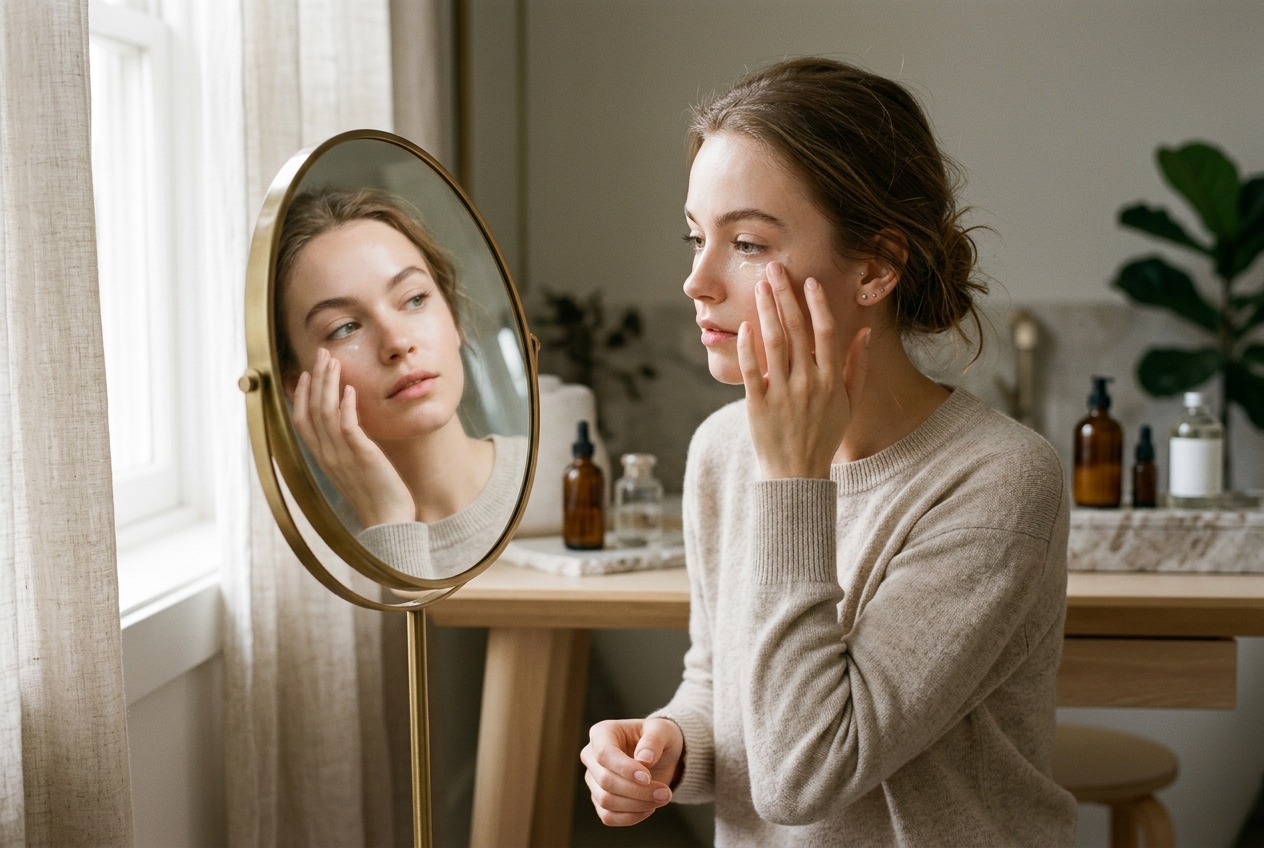
This is where most pages stop short. The under-eye area can show several different small white, whitish or pale bumps, and they are not all milia. Here is how the common causes compare.
| Condition | What it looks like | Typical colour | Texture | Key clue | Harmless? |
|---|---|---|---|---|---|
| Milia | Tiny dome-shaped beads | White to pale yellow | Firm, distinct cyst | Look like a grain trapped under the surface | Yes |
| Syringoma | Small flattish bumps, often in clusters under the lower lids | Skin-coloured to yellowish | Soft to firm | Flatter and more numerous; common in adult women | Yes (benign) |
| Whiteheads (closed comedones) | Small bumps over a clogged pore | White | Soft | Linked to acne and oilier skin; may flare in cycles | Usually |
| Xanthelasma | Flat or slightly raised patches near the inner corners of the lids | Yellow | Soft, plaque-like | Yellow and plaque-shaped, not bead-shaped; can be linked to cholesterol | Benign, but worth a check |
| Sebaceous hyperplasia | Small bumps with a tiny central dip | Yellowish, sometimes pale | Soft | Often a central dimple; more common with age | Yes (benign) |
| Fordyce spots | Tiny pinpoint pale spots | Pale yellow or white | Flat to slightly raised | Visible oil glands; more common on lips, sometimes the eyelid rim | Yes (benign) |
A quick way to think about it: milia are bead-like and white, syringomas are flatter and tend to cluster in numbers, whiteheads sit over a pore and behave like acne, xanthelasma are yellow plaques rather than round beads, and Fordyce spots are tiny pinpoint oil glands. None of these is dangerous in itself, but xanthelasma is the one worth mentioning to a GP, because it can sometimes be associated with raised cholesterol.
If you genuinely cannot tell which one you have, that is normal. Even clinicians often confirm with a close-up look (dermoscopy) or, occasionally, by removing one and examining it.
Syringomas in a bit more detail
Syringomas earn their own mention because they are the look-alike most often mistaken for milia under the eyes. They are benign growths of sweat-gland tissue, they often appear in symmetrical clusters along the lower eyelids, and they are more common in adult women. The important difference for treatment is that syringomas are part of the skin structure rather than a surface cyst, so they cannot simply be lifted out the way a milium can. They tend to be more stubborn and need a different approach, which is exactly why getting the right label first saves you money and disappointment.
Xanthelasma and the cholesterol question
If your under-eye or inner-corner spots are clearly yellow and flat like a smear rather than a raised bead, that points towards xanthelasma. It is still benign, but in some people it is linked to raised blood cholesterol or other lipid problems, so it is worth a mention to your GP, who may suggest a simple blood test. This is why “white spots under eyes cholesterol” is such a common search: people are right to flag yellow plaques rather than just treat them cosmetically.
What causes white spots under the eyes to appear
For milia specifically, the underlying mechanism is trapped keratin. Things that can contribute or make them more likely include:
- Heavy or occlusive eye creams. The skin under the eyes is much thinner than the rest of the face, so rich, thick products can sit on it and contribute to trapped keratin. A lighter eye product can help reduce recurrence.
- Skin damage or healing. Sunburn, blistering, certain rashes, and aggressive resurfacing can trigger secondary milia in the affected area.
- Sun damage over time, which thickens and disorganises the outer skin layer.
- No identifiable cause at all. Plenty of primary milia just appear, and that is normal.
One honest caveat: lifestyle tweaks (lighter products, gentle exfoliation, sun protection) can lower the chance of new milia forming, but they rarely clear ones that are already there. Existing milia usually either resolve on their own or need physical removal.
How to get rid of milia and other white spots
How you treat under-eye white spots depends entirely on which condition you actually have. Below are the realistic options. The under-eye area is delicate and close to the eye itself, which is exactly why home extraction is a bad idea.
Leave them alone
For many people this is the right call. Milia, especially in babies and often in adults too, frequently clear without any intervention over a number of weeks to months. If a bump is small, stable, not bothering you, and clearly behaving like a milium, watchful waiting is reasonable and costs nothing.
Skincare adjustments (prevention, not a cure)
A sensible routine can reduce how often new milia form:
- Switch to a lighter, non-occlusive eye product.
- Use gentle exfoliation elsewhere on the face (a mild retinoid or a gentle acid can help skin turnover), while being cautious right under the eyes.
- Wear daily sun protection, since sun damage is a contributor.
The AI Overview and a lot of social advice push retinol eye creams for under-eye milia. The honest position: gentle retinoid or acid exfoliation can support skin turnover and may help prevent new milia, but it will not reliably pop existing ones out, and harsh actives right under the eye can irritate thin skin. Treat these as prevention, not a guaranteed fix.
Professional removal of milia
The standard, effective route for milia that will not budge is removal by a trained clinician. Common methods include:
- Lancing and extraction. A sterile fine needle or blade makes a tiny opening and the keratin core is lifted out. This is the most common method and is usually quick.
- Hyfrecation (electrocautery). Tiny electrical pulses treat the lesion, sometimes used for milia that are harder to extract.
These are minor procedures, but “minor” still means “done by someone trained, with sterile technique, near your eye”. A reputable clinic will assess the area first. Expect mild redness afterwards that settles quickly.
Treatment for syringomas, xanthelasma and the rest
Because syringomas are structural rather than surface cysts, they are handled differently and can be more resistant. Removal usually targets the deeper tissue (commonly with electrocautery/diathermy or a laser such as CO2 or erbium), results vary, and recurrence is possible. Xanthelasma and sebaceous hyperplasia each have their own management routes. The thread running through all of them: get the lesion correctly identified first, because a one-size-fits-all “milia removal” booking will not suit a syringoma or a xanthelasma.
What not to do
- Do not squeeze, scratch or needle them at home. The under-eye skin is thin and close to the eye, and DIY attempts risk infection, scarring, or injury. The AI Overview and dermatologists agree on this: don’t pop them.
- Do not pile on heavy makeup to hide them. Thick, occlusive coverage can make matters worse. Lighter, breathable products are kinder to the area.
Milia removal cost in the UK
Milia removal is almost always a cosmetic procedure, so you are usually looking at the private route. Here are real published 2026 UK prices so you can see the spread rather than a vague range. Confirm directly with the clinic before booking, as prices change.
| Clinic | Single / small milia | Additional milia | Consultation | Notes |
|---|---|---|---|---|
| Cheshire Lasers (Middlewich) | From around £50 | From around £120 for several | Free | Lower end of the market |
| sk:n Clinics (national) | £200 | £125 each (up to 4); ~£1,000 for 10; ~£1,500 for 20; ~£1,800 over 20 | £185 | Banded multi-milia packages |
| Thames Valley Surgical Services | £230 to £295 | £40 to £95 each | On assessment | Doctor-led minor surgery |
| Cosmedics (London) | From £250 | Quoted on assessment | £75 (redeemable against same-day treatment) | London doctor-led |
The takeaway: a single milia removal in the UK typically runs from about £50 at the budget end to £200 to £300 at doctor-led clinics, with national chains charging a separate consultation fee (free to around £185). If you have a large cluster, ask about a banded multi-milia package rather than paying per spot, as the per-milia cost falls sharply.
Syringoma removal cost in the UK
Syringomas cost more to treat than milia because they need methods that reach deeper tissue, and they often need more than one session. Real published 2026 UK prices:
- Crystal Palace Clinic (South London): consultation/test treatment £50, first treatment £150, follow-up sessions £70 to £125.
- rtwskin: laser treatment from £350 per session.
- Mid Yorkshire Skin Clinic: from £350, plus around £150 for local anaesthetic.
- Skin Surgery Clinic (Leeds): laser removal £395.
- Centre for Surgery (London): periocular (around-the-eye) syringoma £495 per session.
So a single syringoma session runs from roughly £150 to £495 depending on method, location and clinic, and because recurrence is common, budget for the possibility of repeat sessions. This is specialist territory: a proper consultation is worth far more than a cheap one-off booking.
Will the NHS remove white spots under the eyes?
Usually not, if the reason is purely cosmetic.
The NHS treats milia, syringomas and xanthelasma as benign, so removal for appearance alone is generally not funded. A GP will often confirm what the bump is and reassure you, but will not arrange cosmetic removal on the NHS just because you dislike how it looks. That is why almost all under-eye milia and syringoma removal happens privately.
There are narrow exceptions where the NHS is still the right first stop:
- Diagnostic doubt. If it is not clear what a bump is, the priority is diagnosis, not cosmetics, and that is squarely an NHS job. Your GP can examine it and refer you if needed.
- A bump that is causing real problems, for example one that repeatedly catches, bleeds or gets infected, or any lesion that is changing.
- Yellow plaques near the eyelids (possible xanthelasma). The NHS interest here is the possible cholesterol link, not the cosmetic appearance, so a GP may arrange a blood test even though removal itself would be private.
The honest takeaway: if you simply want under-eye white spots gone for looks, plan on the private route. If you are unsure what they are, see your GP first, because diagnosis is the part the NHS does. For how the referral and private routes fit together, see how to see a dermatologist in the UK [internal link — confirm live before publish].
When to see a GP or dermatologist
Most under-eye white spots are harmless and need no urgent action. See a GP or dermatologist if:
- You are not sure what the bump is, or it does not match the simple “small, white, firm, stable” picture of milia.
- A spot is growing, changing shape or colour, bleeding, crusting or not healing.
- The bumps are yellow and plaque-like near the inner eyelids (possible xanthelasma, which is worth a cholesterol conversation).
- You have many spots appearing quickly, or they are causing irritation.
- You want them removed and would like it done safely by a trained professional, given how close the area is to the eye.
A GP can confirm the diagnosis and refer you where appropriate. For purely cosmetic removal, a reputable, properly regulated clinic is the usual route. Skin tags are a different but related lump people often want removed; see skin tag removal in the UK for how that compares.
Frequently asked questions
Will white spots under my eyes go away on their own?
How do I get rid of milia under my eyes?
Are white spots under the eyes dangerous?
Can I remove milia under my eyes at home?
What is the difference between milia and whiteheads?
How much does milia removal cost in the UK?
Does eye cream cause white spots under the eyes?
This is general information, not medical advice. See a GP or dermatologist about your own skin.
Sources
- NHS: Milia (milk spots) and benign skin lump advice
- British Association of Dermatologists (BAD): patient information on benign skin lesions
- DermNet: milia, syringoma, xanthelasma, sebaceous hyperplasia, Fordyce spots
- NICE Clinical Knowledge Summaries: benign skin lesions and referral guidance
- Primary Care Dermatology Society: benign lesion identification
- UK clinic price pages (sk:n Clinics, Cosmedics, Thames Valley Surgical Services, Cheshire Lasers, Crystal Palace Clinic, rtwskin, Mid Yorkshire Skin Clinic, Skin Surgery Clinic, Centre for Surgery), accessed June 2026