
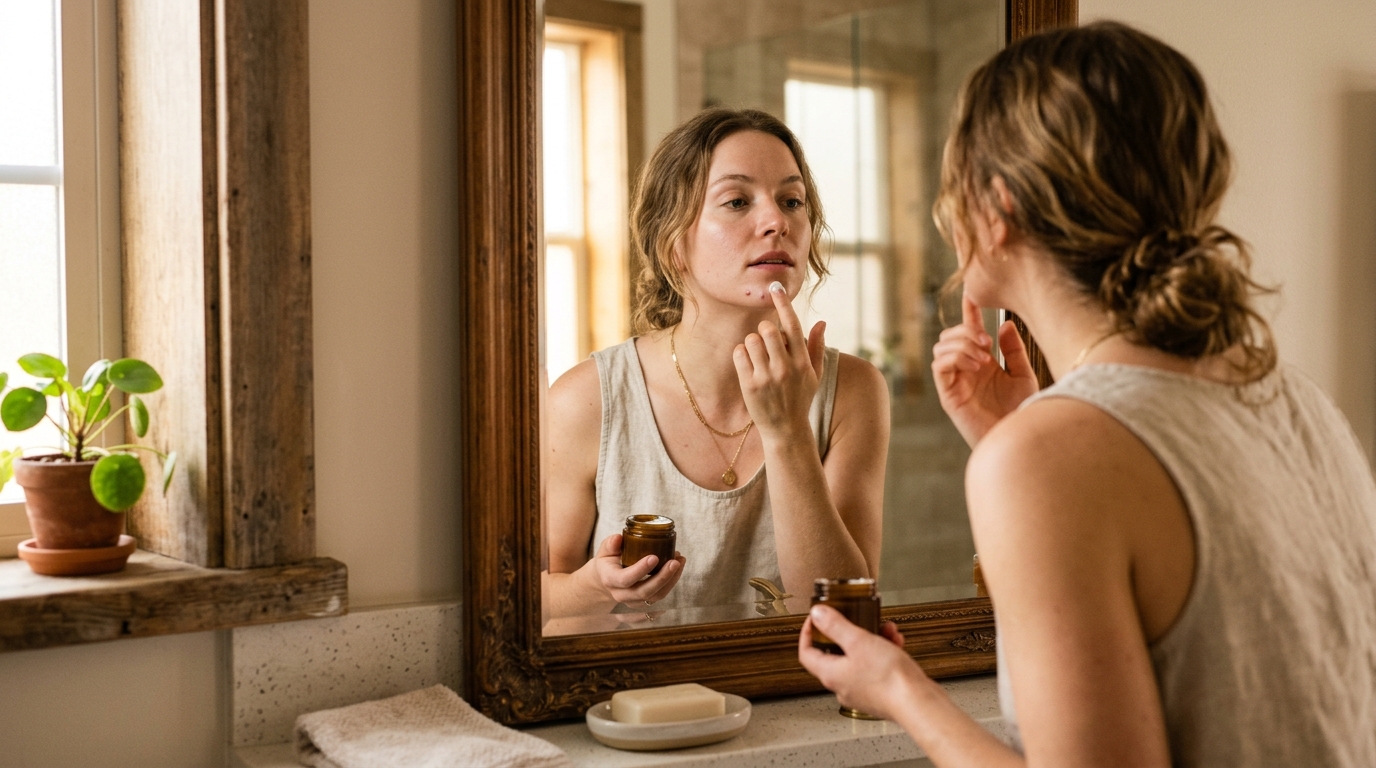
Table of Contents
- 1 Does Sudocrem help spots?
- 2 What is Sudocrem, actually?
- 3 So does Sudocrem help spots, or not? The honest split
- 4 How to use Sudocrem for spots (if you are going to)
- 5 Occasional spot vs actual acne: which are you treating?
- 6 What actually helps spots: the evidence
- 7 Common spot and acne myths, debunked
- 8 When to see a GP or dermatologist
- 9 Frequently asked questions
- 10 The bottom line
- 11 Sources
Does Sudocrem help spots?
The short answer
Partly. Sudocrem can calm a single inflamed spot and may make it look less angry by morning, thanks to its zinc oxide and soothing, mildly antiseptic base, but it is not an acne treatment. It does not unclog pores, prevent new spots or clear a breakout, because it contains none of the proven anti-acne actives (benzoyl peroxide, salicylic acid, a retinoid or an antibiotic). It was designed for nappy rash and minor skin irritation. Used as an occasional overnight dab on one spot it is harmless and can take the heat out of it; smothered over acne-prone areas its thick, occlusive base can trap oil and make some people break out more.
- Can calm a single inflamed spot overnight
- Not an acne treatment — won’t clear breakouts
- No proven anti-acne actives
- Real results: benzoyl peroxide, salicylic acid or adapalene
That gap between what Sudocrem actually does and what people hope it does is where most of the confusion lives. This page covers what is really in the tub, how to use it on a spot, what it will not do, and what the recognised UK evidence says genuinely treats acne, so you can stop spending money on the wrong thing.
✓ Sudocrem can
- Calm one inflamed spot
- Reduce redness overnight
- Soothe minor irritation
✗ Sudocrem can’t
- Treat or cure acne
- Unclog pores
- Stop new spots forming
What is Sudocrem, actually?
Sudocrem Antiseptic Healing Cream is sold widely across the UK. It is best known as a nappy rash cream, but people reach for it for all sorts of minor skin complaints, including the odd spot.
Its main active ingredient is zinc oxide, in a thick, water-repellent base of liquid paraffin, beeswax and lanolin, plus small amounts of ingredients including benzyl alcohol and benzyl benzoate (which act as a preservative and a mild local anaesthetic). In plain terms:
- Zinc oxide forms a protective barrier over the skin and has mild astringent, soothing and anti-inflammatory properties. It can help dry surface oil on an individual spot.
- The benzyl alcohol / benzyl benzoate give a mild antiseptic and numbing effect, which can take the sting out of a sore spot.
- The paraffin, beeswax and lanolin base seal in moisture and shield raw or broken skin, and physically stop you picking at a blemish.
None of that is an acne medicine. There is no benzoyl peroxide, no salicylic acid, no retinoid and no antibiotic in Sudocrem, which are the ingredients with real evidence behind them for acne (more on those below).
A quick word on a common mix-up. Some articles claim Sudocrem contains “benzyl alcohol, one of the most effective topicals in acne treatment”. That conflates two very different things. Benzyl alcohol (a preservative and mild anaesthetic) is not the same as benzoyl peroxide (a proven anti-acne active). The names sound alike and are routinely confused, but only one of them treats spots, and it is not the one in Sudocrem.
So does Sudocrem help spots, or not? The honest split
What Sudocrem can do for a spot:
- Calm redness and take the heat out of one inflamed, sore spot.
- Soothe the sting of a spot you have picked or that has burst.
- Form a protective barrier while the skin underneath repairs, and stop you picking at it.
- Possibly make a single angry whitehead look less inflamed by morning, partly because zinc oxide dries excess surface oil.
What Sudocrem cannot do:
- Unclog pores or prevent new spots forming.
- Kill the bacteria (*Cutibacterium acnes*) involved in acne in any meaningful, treatment-level way.
- Treat blackheads, whiteheads at the comedone stage, or cystic acne.
- Fade acne scars or the dark marks left behind after a spot heals.
- Replace a proper acne routine if you break out regularly.
There is a catch worth flagging. Sudocrem is thick, occlusive and contains lanolin, which can feel heavy on the face. On acne-prone skin, slathering a rich barrier cream over large areas can trap oil and may make some people break out more, not less. Dabbing a thin layer on a single spot is very different from using it as an all-over treatment, and the all-over version is the one that backfires.
So is Sudocrem good for spots? For the occasional inflamed spot, as a one-off overnight soother, yes, with caveats. As an actual acne treatment, no.
How to use Sudocrem for spots (if you are going to)
If you want to use Sudocrem on the odd spot, the way you apply it matters more than anything. Spot use, thin, and only on a clear blemish:
1. Cleanse. Wash your face with a gentle cleanser and pat dry. Do not apply over make-up or dirt. 2. Spot-treat only. Dab a thin layer onto the individual spot with a clean fingertip or cotton bud, not across your whole face. A pea-sized amount covers several spots. 3. Leave overnight. Apply before bed so it can sit undisturbed. This is the “Sudocrem on spots overnight” routine people online swear by, and it is the only version with a sensible rationale. 4. Rinse in the morning. Gently wash it off when you wake up. 5. Stop if it irritates. If skin stings, reddens or you start breaking out more in treated areas, stop using it there.
What it will not do, however you apply it, is clear a breakout or stop new spots. For that you need a proven active used consistently, covered below.
Occasional spot vs actual acne: which are you treating?
The most useful question is not “does Sudocrem work” but “what kind of spot am I dealing with”.
- The occasional spot (one or two, now and then, often before a period or after a stressful week). A thin dab of Sudocrem overnight to calm it is fine. So is a targeted spot treatment with a proven active.
- Actual acne (regular breakouts, blackheads and whiteheads, spots across the forehead, cheeks, chin, chest or back). This needs a consistent routine with proven ingredients, and sometimes a GP or dermatologist. Sudocrem will not touch it.
If your “spots” are tiny, uniform, itchy bumps clustered on the forehead, hairline, chest or back, you may not have ordinary acne at all. That pattern can point to fungal acne, which is driven by yeast and does not respond to standard acne treatments (and certainly not to Sudocrem). And if you are breaking out during pregnancy, some common acne ingredients are off-limits, so it is worth reading up on safe options for pregnancy acne before you treat anything.
What actually helps spots: the evidence
According to the NHS and the British Association of Dermatologists, the ingredients and treatments with genuine evidence behind them for acne are below. Several are available over the counter in the UK; the stronger ones need a prescription.
| Ingredient or treatment | What it does | Availability in the UK | Best for |
|---|---|---|---|
| Benzoyl peroxide | Reduces acne bacteria and helps unclog pores | Over the counter (and prescription strengths) | Inflamed spots, mild to moderate acne |
| Salicylic acid | Exfoliates inside the pore, clears blackheads and whiteheads | Over the counter | Congestion, blackheads, oily skin |
| Azelaic acid | Anti-inflammatory; helps with spots and post-spot marks | Over the counter and prescription | Sensitive skin, marks left after spots |
| Topical retinoids (e.g. adapalene) | Speed up skin cell turnover, unblock pores, prevent new spots | Adapalene available over the counter; others on prescription | Persistent acne, blackheads, prevention |
| Topical or oral antibiotics | Reduce bacteria and inflammation in moderate acne | Prescription only | Moderate inflammatory acne |
| Combined oral contraceptive pill | Can help hormonal acne in some women | Prescription only | Hormonal breakouts in women |
| Isotretinoin | Powerful treatment for severe or scarring acne | Specialist prescription only | Severe, stubborn or scarring acne |
A few practical notes:
- Start low and slow. Actives like benzoyl peroxide and retinoids can cause dryness and irritation at first. Use a small amount, a few times a week, and build up.
- Give it time. Acne treatments typically take several weeks to show a real difference. There is no overnight fix, despite what spot-zapping marketing implies. This is the honest reason a tub of Sudocrem feels appealing: it promises an overnight calm-down, but calming is not clearing.
- Pick one routine and stick to it. Layering five different actives at once usually irritates skin and makes things worse.
Common spot and acne myths, debunked
Myth: Sudocrem cures acne. It does not. It can soothe one inflamed spot, but it has no anti-acne active and used heavily it can worsen breakouts.
Myth: toothpaste dries up spots. Toothpaste is not designed for skin. It can contain ingredients that irritate and burn, and may leave you worse off. Skip it.
Myth: spots mean your skin is dirty. Acne is driven by hormones, oil production and how pores behave, not poor hygiene. Over-washing and harsh scrubbing tend to irritate skin and can make acne worse.
Myth: sunbeds clear acne. UV may temporarily dry the surface and seem to help, but it damages skin, can aggravate acne afterwards, and raises skin cancer risk. Not worth it.
Myth: you should pop every spot. Squeezing pushes bacteria deeper, increases inflammation and raises the risk of scarring and marks. Treat, do not pop.
Myth: if a product stings, it is working. Stinging usually means irritation, not effectiveness. A good acne routine should not leave your skin raw.
When to see a GP or dermatologist
See a GP if:
- Over-the-counter treatments have not helped after about 8 to 12 weeks of consistent use.
- Your acne is moderate to severe, widespread, or on your chest and back.
- You are getting painful lumps or cysts under the skin.
- Acne is leaving scars or dark marks.
- Breakouts are affecting your confidence, mood or daily life.
A GP can prescribe stronger treatments and, where needed, refer you to a dermatologist on the NHS. You can also see a dermatologist privately. For how the NHS and private routes fit together and what each costs, see how to see a dermatologist in the UK. For severe or scarring acne, getting proper treatment early matters, because it is far easier to prevent scarring than to fix it later.
If your skin reaction is to a product rather than ordinary acne (for example redness and bumps after a new sunscreen, or an itchy rash), that is a different problem. See allergic reaction to sunscreen and antihistamine cream in the UK for that side of things.
Frequently asked questions
Does Sudocrem help spots?
Can I put Sudocrem on my face overnight for spots?
Does Sudocrem get rid of spots overnight?
Is Sudocrem good for acne?
Is Sudocrem good for acne scars?
What is better than Sudocrem for spots?
Can Sudocrem make acne worse?
This is general information, not medical advice. See a GP or dermatologist about your own skin.
The bottom line
Sudocrem is a useful little tub to have around for sore, irritated skin and the occasional angry spot. It is soothing, protective and cheap. But it is not an acne treatment, it will not stop spots coming back, and used heavily on the face it can sometimes make things worse. If you break out regularly, put your effort (and money) into proven actives and, when needed, a GP or dermatologist.
Sources
- NHS: Acne
- NHS: Acne treatment
- British Association of Dermatologists (BAD): Acne patient information
- DermNet: Acne
- NICE Clinical Knowledge Summaries: Acne vulgaris management
- Sudocrem prices: Amazon UK, pulled live via DataForSEO, 22 June 2026